As part of our website, we use cookies to provide you with the highest level of service, including services tailored to your individual needs. By continuing to use the website without changing your cookie settings, you agree to the placement of cookies on your device as described in our Privacy Policy. You can change your cookie settings in your web browser at any time. Acceptance of essential cookies is required for the proper functioning of the website. For more detailed information, please refer to our PRIVACY POLICY.
Perovskites—found both in nature and produced synthetically—have the potential to transform technologies such as low-cost, high-efficiency solar cells and light-emitting diodes (LEDs). Scientists worldwide are working to improve their durability and performance, while also exploring new fields of application.
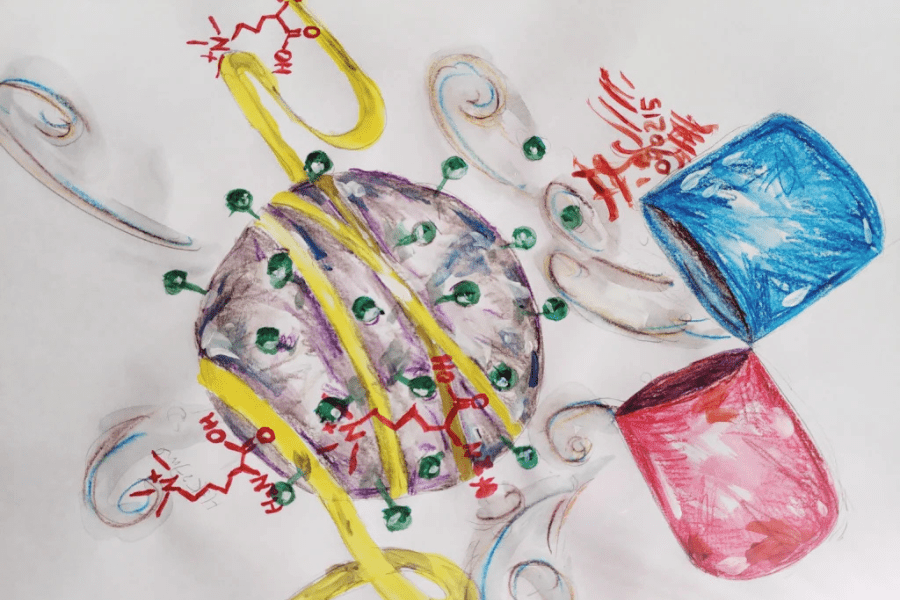
Dr. Łukasz Pietras, a member of the Cancer Neurophysiology Group at Łukasiewicz – PORT, has just defended his doctoral dissertation focused on the study of mitochondria – the structures responsible for energy production within cells. His research sheds new light on the role of the enzyme FBP2, which may be crucial not only for sugar metabolism but also for the proper functioning of mitochondria.
Łukasz Duda, who began his scientific journey at Łukasiewicz – PORT already during his master’s studies, has just defended his Industrial PhD at the University of Wrocław. The project was carried out in collaboration with our institute. It’s a major achievement and – as Dr. Duda himself puts it – the beginning of a new chapter.
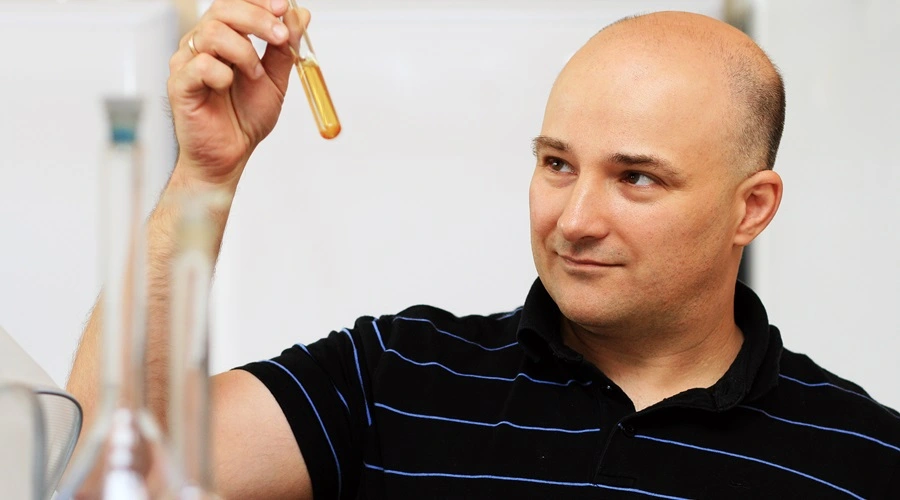
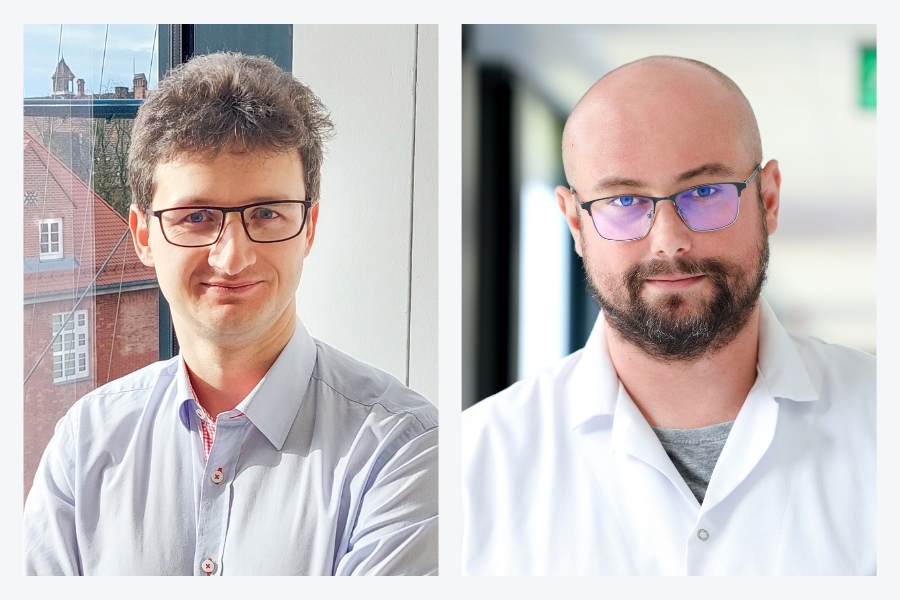
Improving the safety of medicine storage and ensuring proper conditions for food warehousing are just some of the benefits of using sensory labels, a technology currently being developed by researchers led by Dr. Bartłomiej Potaniec from the Advanced Materials Synthesis Group from Łukasiewicz – PORT (AdMat Group – team Leader: Dr. hab. Joanna Cybińska). The project team also includes Dr. Franz Steppeler, Weronika Zając, Dr. Łukasz Duda, and Maria Zdończyk.
Dr Dominik Kowal from the Materials for Photonics Research Group at Łukasiewicz – PORT discusses the current state of research on nuclear batteries and their potential applications. He is the first author of the paper “Current trends in material research for nuclear batteries: Harnessing metal perovskite halides and other chalcogenides for greater compactness and efficiency”, published in March in Applied Physics Reviews, a journal issued by the American Institute of Physics.
Patients diagnosed with breast cancer often hear from doctors that cancer is not a death sentence. Modern medicine offers a range of treatment options depending on the stage of the disease: surgery, chemotherapy, radiotherapy, or costly monoclonal antibody therapies. Unfortunately, mortality among patients remains high: in 2022, 2.3 million breast cancer cases were diagnosed worldwide, of which 670,000 were fatal (WHO data).
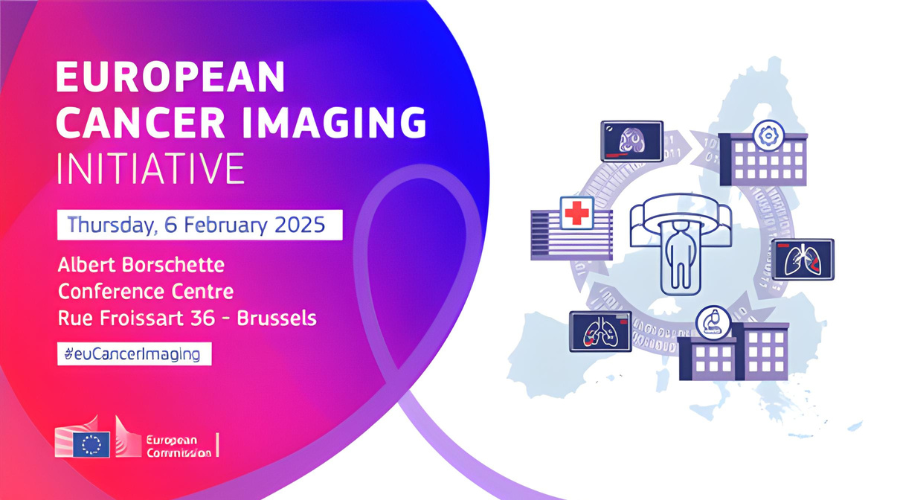
On 06/02/2025, the European Commission, together with the European Society of Radiology (ESR) and the European Federation for Cancer Images (EUCAIM), brought together 160 leading experts from policy-making, research, healthcare, and industry to explore how the European Cancer Imaging Initiative leverages health data and artificial intelligence to improve cancer detection and treatment.
The team led by Dr. Heng-Chang Chen from Łukasiewicz – PORT, in collaboration with scientists from Jagiellonian University and KU Leuven (Belgium), has set out to identify innovative strategies for the functional cure of HIV. The research has received PLN 3.5 million in funding from the Weave-U NISONO program.
We invite our research groups to participate in the “Commercialisation Ideation Workshop”, organized as part of the SAME-NeuroID – Senior Staff Training project, in cooperation with the Technology Transfer Office of Łukasiewicz – PORT. The workshop will take place on Wednesday, 26 February, and will be led by the Biocatalyst Foundation—a non-profit organization that supports the development of the biotechnology community and facilitates networking and international collaboration.
Dr hab. Grzegorz Chodaczek, leader of the Immunotherapy Research Group at Łukasiewicz – PORT, demonstrates that appropriately selected gamma-delta T lymphocytes obtained from human blood may constitute an effective tool in the fight against the most aggressive brain tumor – glioblastoma multiforme. Nearly PLN 15 million granted to the Wrocław-based researchers by the Medical Research Agency (ABM) will enable the continuation of studies aimed at developing an innovative anticancer therapy based on human immune cells.