For decades, we assumed that a tumor is an autonomous aggressor – a collection of mutated cells growing at the expense of healthy tissue. This model – cognitively convenient and clinically functional – now appears insufficient. New findings suggest it is a major oversimplification. A tumor does not act in isolation. It negotiates. It sends signals. It forms synapses. And it may be operating under rules we do not yet understand. Modern oncology is therefore not so much delivering new answers as it is posing entirely different questions.
Glioblastoma integrates into neural networks
The most striking evidence comes from studies on glioblastoma. Professor Frank Winkler from Universitätsklinikum Heidelberg – this year’s recipient of The Brain Prize 2025 and a keynote speaker at PORT for Health: Oncology 2026 – has shown, in a series of studies published in “Cell” and “Nature”, that glioblastoma cells do not grow in isolation. This is not a metaphor: the tumor integrates into the brain’s electrical circuits, using neuronal activity as fuel for growth and invasion. The higher the neuronal activity in a given region, the faster the tumor grows.
The clinical implications are substantial: therapies used in epilepsy – such as perampanel, which blocks AMPA receptors – are now entering clinical trials as potential treatments for glioblastoma. This represents a paradigm shift, suggesting that neurologists and oncologists should be working side by side.
Winkler’s findings are only one thread in a broader transformation underway in oncology. It is becoming clear that the nervous system engages in dialogue with tumors not only in the brain.
The nervous system as a driver of progression – beyond the brain
Dr. Andrew Shepherd from MD Anderson Cancer Center in Houston studies neuropathy in colorectal cancer patients. His research shows that neuronal dysfunction appears even before chemotherapy begins – triggered by the tumor itself. This observation has significant implications for therapy design: if cancer damages nerves before any treatment is administered, the baseline for intervention must be redefined.
Dr. Christoph Klose from Charité Berlin goes further, investigating how the enteric nervous system regulates stem cell differentiation and shapes type 2 immune responses. His work on VIP (vasoactive intestinal peptide) signaling suggests that the neuro-immune axis in the gut may act as a key regulator. In practical terms, the nervous system may help determine whether the microenvironment promotes or suppresses tumor development.
A consistent picture is emerging: the nervous system is not a passive observer of cancer progression. It is an active participant – and a potential therapeutic target.
The immune system – an ally with unexpected partnerships
The paradigm shift also extends to immuno-oncology. Dr. Aurélie Poli from the Luxembourg Institute of Health is studying a counterintuitive question: can chronic allergy protect against glioblastoma? Her research suggests that chronic allergic inflammation may activate anti-tumor mechanisms and limit tumor-induced immunosuppression. This illustrates that signals typically considered pathological may, in certain contexts, play a protective role.
Dr. Joanna Poźniak from VIB-KU Leuven has shown that natural killer (NK) cells – traditionally seen as cytotoxic allies in cancer defense – can, under specific conditions, undermine immunotherapy. In some melanoma subtypes, they block T-cell infiltration, reducing treatment efficacy. The implication is clear: therapeutic success depends not only on the mechanism of action, but also on the tumor’s biological context.
This conclusion is reinforced by Professor Sheeba Irshad from King’s College London. Her research on extracellular vesicles (EVs) in breast cancer demonstrates how the tumor microenvironment actively reprograms immune responses – not through a single pathway, but via a network of signals that modulate T cells depending on the cancer subtype.
Not only AI, but also viruses as tools
Prof. Gabri van der Pluijm from LUMC in Leiden studies oncolytic viruses not as direct tumor-killing agents, but as vectors that induce durable anti-tumor immunity. This shift – from a destructive tool to an immune activator – opens new possibilities for combination therapies with checkpoint inhibitors.
Dr. Tobias Bald from the University Hospital Bonn applies artificial intelligence to the design of miniature proteins capable of binding molecular targets previously considered “undruggable.” As he notes, computational design is now outpacing experimental validation. This is both a challenge and a signal that the pace of discovery is fundamentally accelerating.
A new paradigm – cancer as an ecosystem
Although these studies span different domains, they converge on a single conclusion: cancer is not an isolated entity. It is part of a dynamic ecosystem in which the nervous system, immune system, and cellular microenvironment are in constant dialogue. Understanding this dialogue is the central task of contemporary oncology.
PORT for Health: Oncology 2026
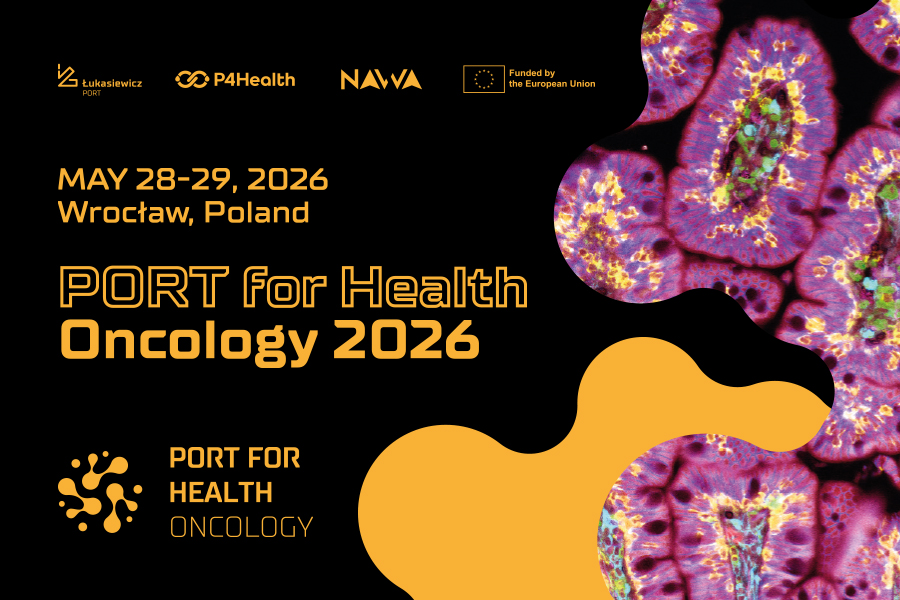
These research directions come together in the program of PORT for Health: Oncology 2026, which returns to Wrocław this May. Organized by Łukasiewicz – PORT and the P4Health Center of Excellence, the event will bring together over 20 international speakers, integrating translational and business perspectives.
The conference focuses on translating advances in cancer biology into concrete therapeutic strategies and directions for medical technology development. Particular emphasis is placed on areas where integration – across neurobiology, immunology, and AI – can directly improve treatment outcomes.
The event is intended for researchers, clinicians, and representatives of the biotech and pharmaceutical sectors.
PORT for Health: Oncology 2026
May 28-29, 2026, Wrocław
online and on-site
Program and registration: health.port.org.pl