As part of our website, we use cookies to provide you with the highest level of service, including services tailored to your individual needs. By continuing to use the website without changing your cookie settings, you agree to the placement of cookies on your device as described in our Privacy Policy. You can change your cookie settings in your web browser at any time. Acceptance of essential cookies is required for the proper functioning of the website. For more detailed information, please refer to our PRIVACY POLICY.
Our laboratory conducts innovative, multidisciplinary research aimed at understanding the organization and function of synapses in the central nervous system, as well as those between motor neurons and skeletal muscles.
We use mouse models—including conditional gene knockout mice and transgenic mice—as well as cell cultures to decipher the molecular mechanisms that regulate synapses under physiological and pathological conditions.
Brain research
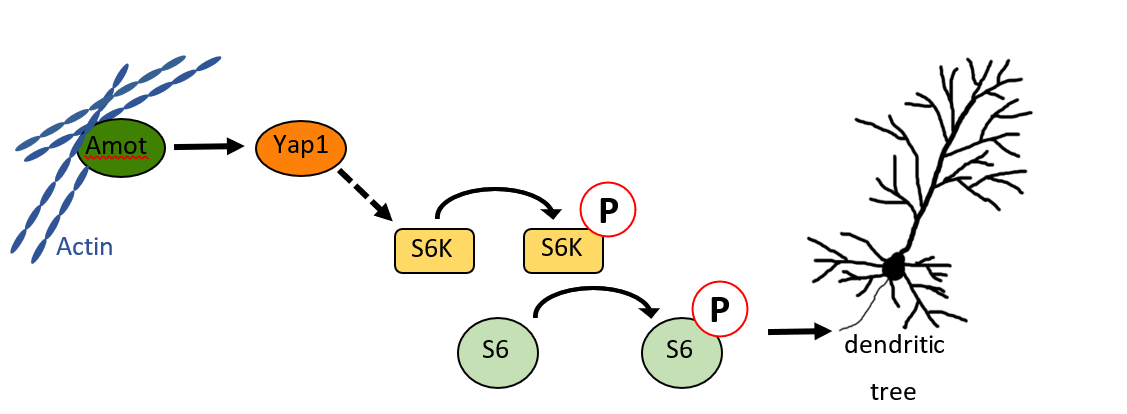
Our recent studies have identified Amot and Yap proteins as key regulators of dendritic tree morphology in cultured neurons and Purkinje cells in vivo. Mice with conditional knockout of Amot or Yap in neurons exhibited morphological abnormalities in the cerebellum and impaired motor coordination. Our analyses showed that Amot- and Yap-dependent dendrite organization involves S6 kinase and phosphorylation of the ribosomal protein S6.
Research on the neuromuscular system
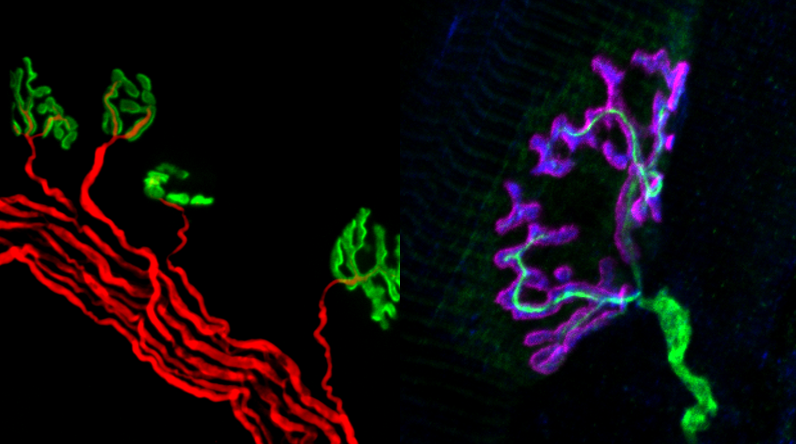
Neuromuscular junctions (NMJs) are specialized synapses formed between motor neurons and skeletal muscle fibers. These structures transmit information from the central nervous system to skeletal muscles, enabling their contraction.
Proper NMJ function is essential for voluntary movements, maintaining posture, and breathing. As a result, disruptions in NMJ function lead to severe neuromuscular diseases, characterized by muscle atrophy, loss of strength, and respiratory impairment.
It is estimated that there are more than 300 neuromuscular diseases, many of which have unknown etiology. This makes understanding the mechanisms underlying the organization and function of these synapses critically important.
Figure 1. Rojek KO, Krzemień J, Doleżyczek H, Boguszewski PM, Kaczmarek L, Konopka W, Rylski M, Jaworski J, Holmgren L, Prószyński TJ. „Amot and Yap1 regulate neuronal dendritic tree complexity and locomotor coordination in mice”. PLoS Biol. 2019 May 1;17(5):e3000253.
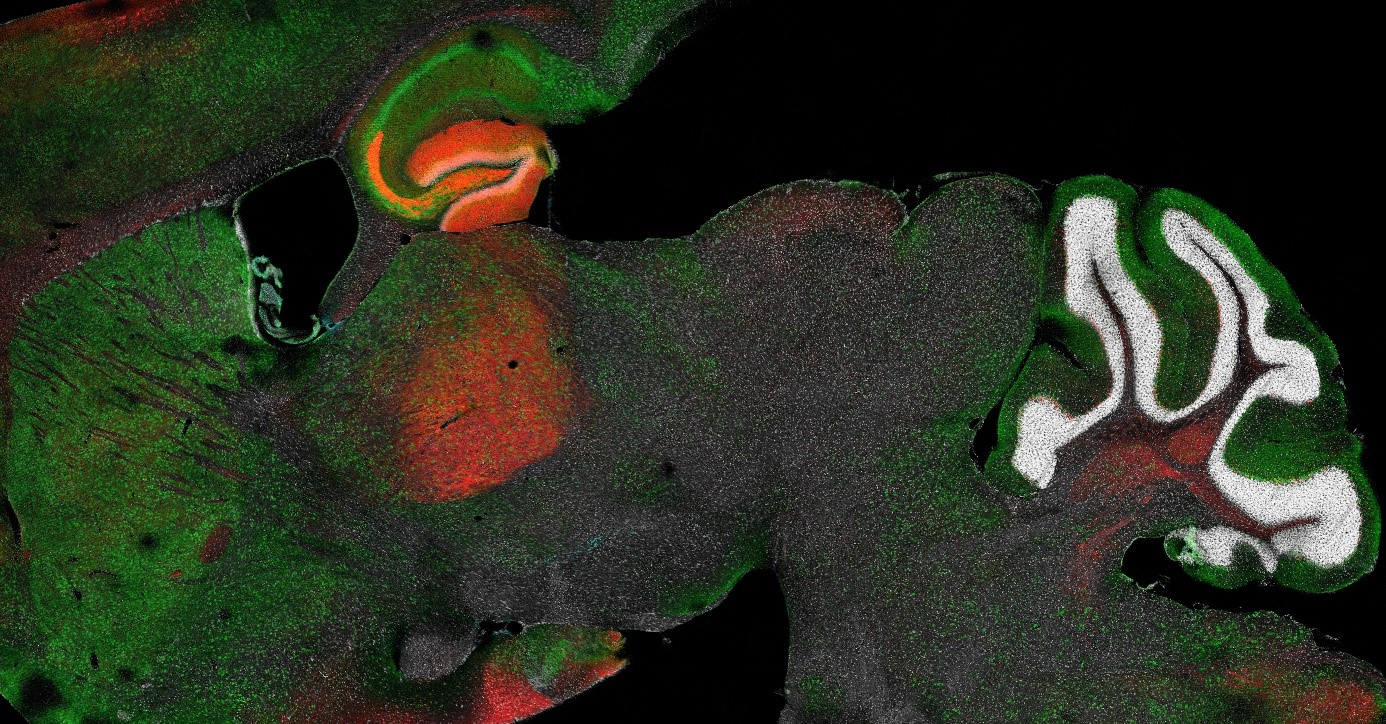
Figure 2: Brain immunohistochemistry (courtesy of Anthony Kischel).
Figure 3: Motor neurons (red on the right image and green on the left image) innervate postsynaptic machinery (AChR, green on the right, and purple on the left) on the muscle fibers (the muscle contractile machinery is visible as stripes on the right image). Courtesy of Teresa De Cicco.
This publication was honored with the Konorski Award for the best neuroscience publication in Poland in 2019. . The Konorski Award is a joint distinction granted by the Polish Society for Neuroscience (PTBUN) and the Neurobiology Committee of the Polish Academy of Sciences.
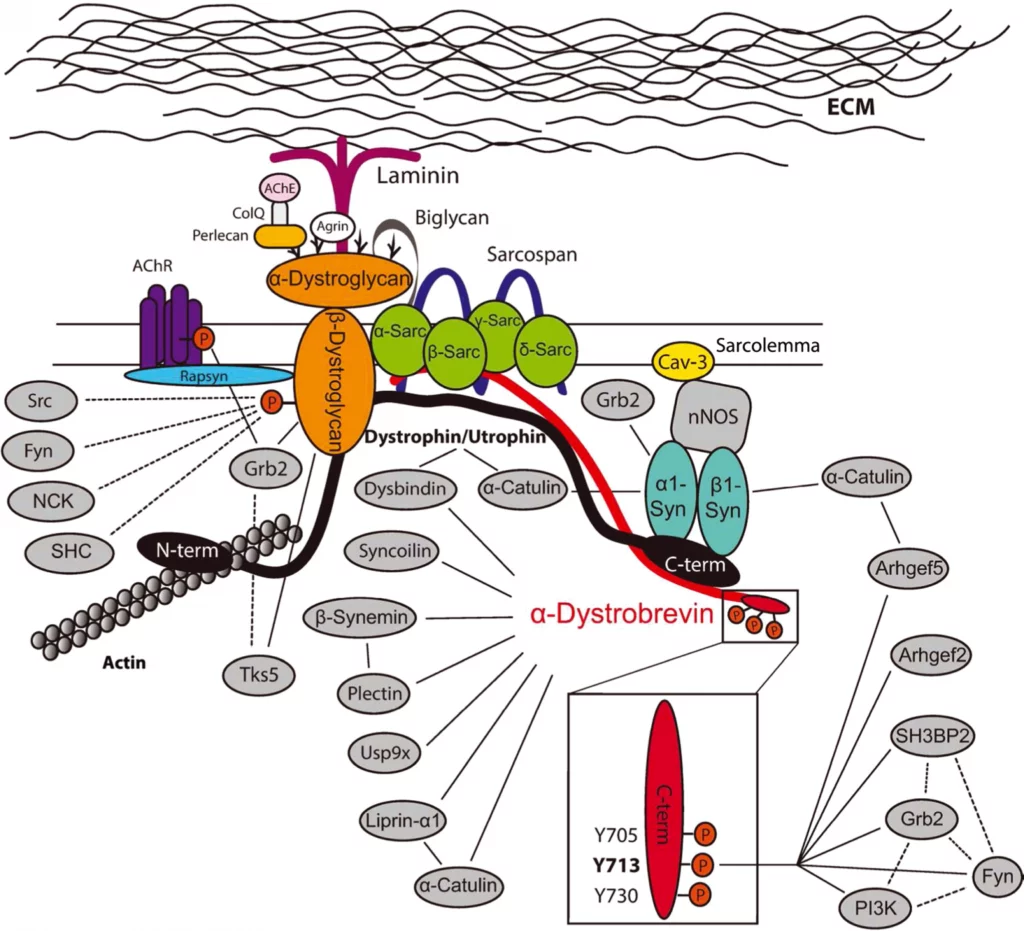
Gawor and Prószyński, NYAS 2018
Kompleks dystroglikanu
A portion of our projects focuses on characterizing new components of the dystrophin-associated glycoprotein complex (DGC). This protein complex plays a key role in maintaining the integrity of muscle fibers as well as in the organization and development of the postsynaptic apparatus.
At the molecular level, the DGC stabilizes synaptic components by linking them to the actin cytoskeleton and the extracellular matrix. It also functions as a central hub organizing the assembly of signaling molecules. Recently, we identified new synaptic proteins that are recruited to the DGC, and we are currently conducting more detailed studies on some of them.