The year 2025 marked a period of step-change growth in the research capacity of Łukasiewicz – PORT. Newly acquired, highly specialized infrastructure represents not only a modernization of facilities, but also the opening of new research directions in the fight against brain tumors, chronic pain, and the energy crisis.
Strategic expansion of the research ecosystem
The institute’s dynamic development is reflected in the scale of investments made in the previous year. The total value of research equipment acquired in 2025 exceeded PLN 6 million. This growth is the result of the high effectiveness of Łukasiewicz – PORT project teams in securing national and European research grants.
Neurobiology – from mapping the nervous system to pain control
Research on brain plasticity, interactions between neurons and cancer cells, and the development of advanced anticancer therapies increasingly requires tools that integrate functional imaging with advanced electrophysiology. A unique in vivo fluorescence microscope, designed and built by researchers at Łukasiewicz – PORT, enables real-time observation of neuronal activity in living organisms. When combined with an electrophysiological system based on Neuropixels technology, this platform allows researchers to simultaneously monitor the activity of neuronal networks and the mechanisms of information processing in the nervous system.
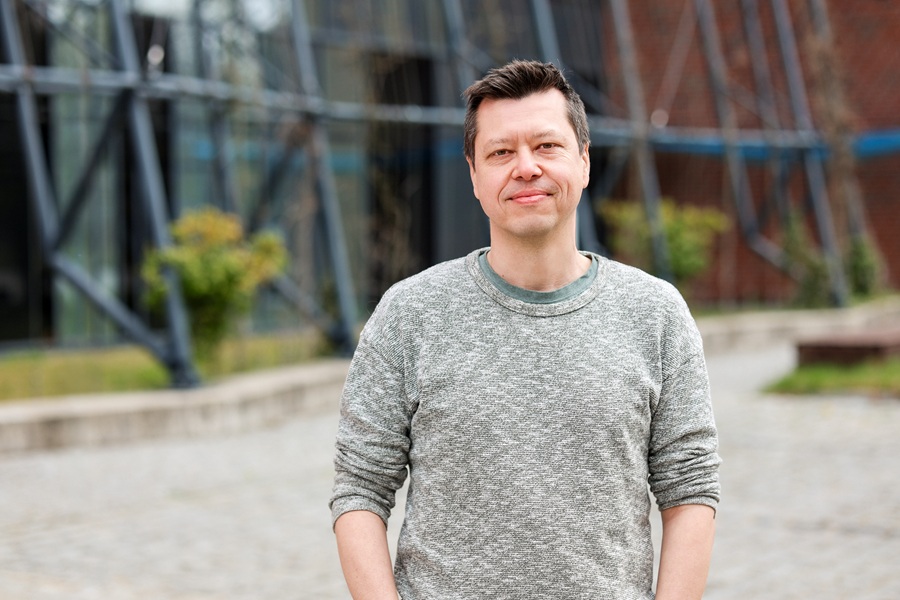
This technology is a key component of projects such as NOMOD. The project is led by Dr. Mateusz Kucharczyk, head of the Cancer Neurophysiology Research Group, who received PLN 3.5 million in funding from the National Science Centre to investigate the mechanisms of noradrenergic modulation of pain.
“We are studying how the brain is able to suppress pain by sending a chemical signal –noradrenaline – to nerve endings in the spinal cord. A better understanding of this mechanism will allow us to develop new, more precise analgesic drugs, including for oncology patients,” explains Dr. Kucharczyk. “The newly acquired equipment constitutes a complementary, state-of-the-art research platform that enables us to conduct advanced functional, structural, and systems-level studies of the nervous system, integrating optical imaging, electrophysiology, and histological analysis.”
This research infrastructure is further complemented by a modern cryostat, which enables precise preparation of tissue sections from the brain, spinal cord, and tumors at low temperatures. This step is essential for achieving a comprehensive understanding of pathological processes.
Immunotherapy – drug development through precise selection of anticancer cells
In the field of immuno-oncology, a key challenge currently facing researchers at Łukasiewicz – PORT is the precise identification of those immune system cells that exhibit the highest potential for combating aggressive brain tumors.
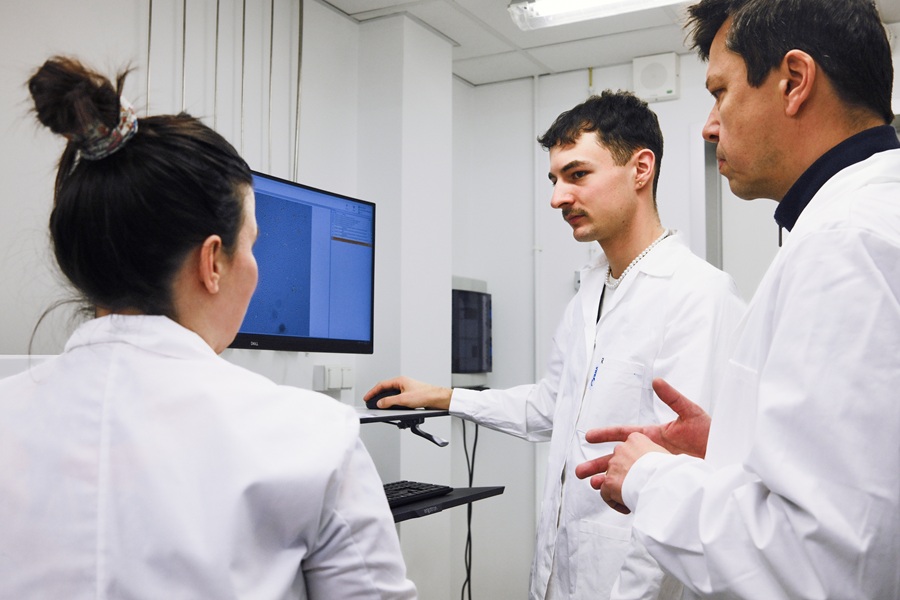
In this area, the team led by Dr. hab. Grzegorz Chodaczek, is carrying out the SelCell project (funded by the Medical Research Agency), which focuses on γδ (gamma delta) T lymphocytes in their interaction with the most common malignant brain tumor with a very poor prognosis – glioblastoma multiforme. These studies, based on biological material obtained through close cooperation with the Regional Center for Blood Donation and Blood Treatment in Wrocław, are supported by an advanced analytical platform composed of a set of instruments used at every stage of the project.
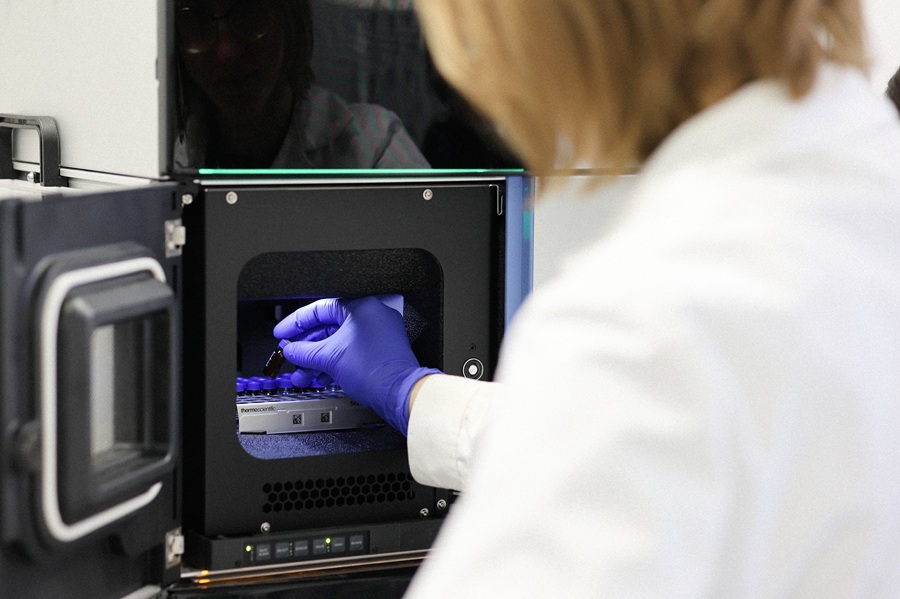
In the first phase of the research, immune cells are isolated from blood, from which γδ T lymphocyte lines are derived through cell culture for tumor cell killing assays. A critical aspect of this process is ensuring absolute stability of the culture parameters for cell cultures obtained from more than 100 donors. This is achieved using a modern IncuSafe incubator, which eliminates random variability of conditions by ensuring precise control of temperature, CO₂ concentration, and humidity.
A central role in the analytical platform is played by the ID7000 spectral cytometer, valued at PLN 1.7 million, which enables the simultaneous assessment of several dozen parameters and the activation status of individual cells. As emphasized by Dr. hab. Grzegorz Chodaczek, head of the Immunotherapy Research Group: “This instrument makes it possible to compare the anticancer activity of the generated lymphocyte cultures and to identify cells with the greatest potential to fight cancer.”
The dynamics and nature of direct interactions between γδ T lymphocytes and tumor cells can in turn be tracked and quantified using the high-throughput Opera Phenix Plus confocal microscope (PLN 2.5 million). Complementary protein profiling, aimed at identifying biomarkers indicative of the anticancer functions of the cultured cells, is conducted using the high-performance liquid chromatograph Vanquish Horizon. Such an integrated technological approach constitutes the foundation for the development of more effective and safer cell therapies, as well as for science as a whole.
Experimental pathology – a pillar of translational oncology and precision medicine
Research in the field of translational oncology constitutes a key direction in the development of precision medicine, linking basic research with clinical practice. One of its pillars is experimental pathology, which enables the analysis of tumor tissue at the molecular, cellular, and histological levels, as well as the correlation of results with clinical data. The integration of molecular and imaging studies makes it possible to carry out research programs aimed at understanding mechanisms of pathogenesis, identifying and validating biomarkers, and developing new diagnostic and therapeutic strategies.
The advanced research infrastructure used by the Biobank Research Group, led by Dr. hab. Patrycja Gazińska, enables the implementation of interdisciplinary projects, including those carried out in cooperation with teams from the Materials Science & Engineering Center of Łukasiewicz – PORT in the field of oncological diagnostics.
As part of a grant from the National Science Centre, the group’s infrastructure was strengthened by the ExoSpin system, designed for efficient, reproducible, and standardized isolation of exosomes and other extracellular vesicles. This instrument enables the acquisition of material from plasma, serum, urine, other body fluids, and cell cultures while maintaining high purity of lipid structures and nucleic acids (RNA, mRNA). By minimizing the risk of sample degradation, this equipment is used by the Biobank Research Group in studies related to head and neck cancers, as well as in projects in the field of “liquid biopsy” diagnostics conducted in cooperation with the Materials Science & Engineering Center of Łukasiewicz – PORT.
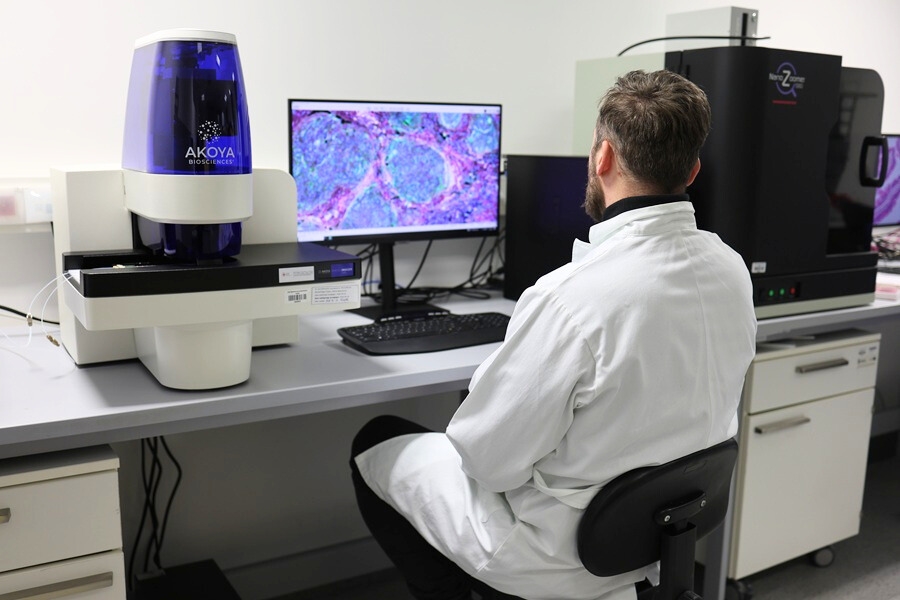
Thanks to funding from the Medical Research Agency (ABMPATH project), the capabilities for digitization of histopathological slides were expanded through the addition of a fluorescence module for the Hamamatsu S60 scanner. Extending the functionality of the device with high-sensitivity imaging of histological and cytological specimens enables the subsequent use of advanced computational tools to deepen analyses of biomarker expression and spatial studies within tumor tissue.
Materials engineering – characterization of porosity
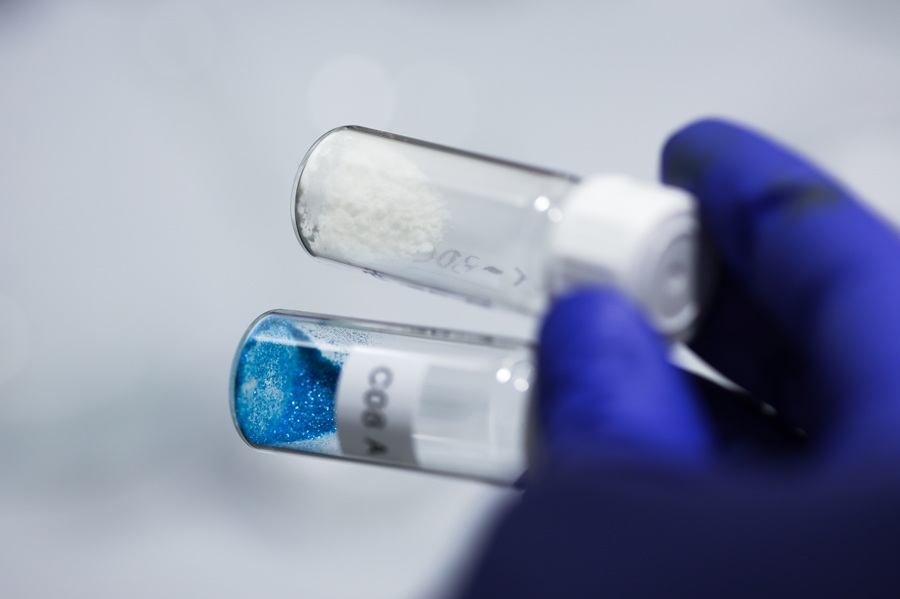
Alongside biomedical research, Łukasiewicz – PORT is also developing materials technologies. A new gas adsorption and porosity analyzer, used in projects led by Dr. Min Ying Tsang, Head of the Functional Macromolecules and Porous Materials Research Group, enables precise characterization of specific surface area, gas capacity and pore volume in materials such as zeolites, metal–organic frameworks, and porous carbons.
The equipment supports the design of new materials and technologies with applications, among others, in catalysis, sensing, gas storage and separation.
The most important investment – human potential
The investments made in 2025 form a coherent research ecosystem in which advanced imaging technologies, molecular analysis, and materials engineering become catalysts for the institute’s scientific potential. Research equipment is not an end in itself, but rather a tool for implementing the most ambitious projects at the interface of science, medicine, and industry.
As emphasized by the Director of Łukasiewicz – PORT, Prof. Jarosław Bosy: “Investment in technical infrastructure is, above all, an investment in people and the development of their unique competencies. It is people who determine our position in the world of science.”
The scale of last year’s implementations constitutes a foundation for subsequent stages of development. The institute is already preparing to implement projects recommended for funding under the European Funds for a Modern Economy (FENG) 2021–2027 program. These include the development of microelectronics and energy technology infrastructure within the Interinstitutional Center for Advanced Energy Technologies (BINGO-IEL2), as well as the construction of a modern, nationwide genomic platform under the “Genomics for Poland” (G4PL) project.