About Us
The Functional Macromolecules Research Group specialises on design, synthesis and engineering inclusion compounds, metal complexes, metal-organic frameworks (MOFs), metal organic cages (MOCs) and their derivatives. Our primary focus is on developing eco-friendly and robust materials for applications such as gas capture, separation, catalysis and sensing.
We explore material properties starting from understanding their behaviour including molecular interactions, functionality and reactivity. This foundation allows us to tailor materials with desired properties, evaluate the performance for targeted applications and ultimately facilitate implementation in real-world scenarios.
Programmable and sustainable materials
Our team compose with synthetic chemists and engineers both in organic and inorganic areas. We are experienced in a range of synthetic methodologies and perform comprehensive characterization and analysis of material properties using various techniques. In particular at:
- introduction of desired functional components,
- determination of the molecular and framework structures,
- study of stability under different conditions,
- analysis of the optical responses,
- measurement of accessible surface area,
- visualisation of macro-scale morphology.
We also have hands-on skills to transform materials into practical phase. Our research spans from fundamental studies to industrial implementation. By integrating synthetic principles and programmable functionalities with innovative engineering approaches, the FunMaP group aims to explore new ways to improve material performance and overcome the challenge of existing technologies. Our multidisciplinary research not only enhances the properties of material but also paves the way for the development of sustainable solutions.
QREDIT – our core
Our group also value “QREDIT”
- Quality
- Respect
- Ethics
- Diversity
- Innovation
- Teamwork
With QREDIT, we provide space for researches and personal development. Together, we create a dynamic and inclusive atmosphere where everyone is valued to deliver credible and impactful science.
What are porous materials?
Porous materials usually contain large numbers of voids or pores within their structure/network that allow more efficient mass transfer thanks to their relatively large accessible surface area compared to non-porous materials. Common examples from nature is wood or zeolites. Owing to the specific porous features, porous materials have been extensively studies in decades and have been used in many industrial sectors. Porous materials includes: porous carbon, zeolites, metal organic frameworks (MOFs), covalent organic frameworks (COFs) and cages/polyhedral. Our focus mainly around metal-organic based porous materials. If you are interested, some of these up-to-date journals will provide you more insights.
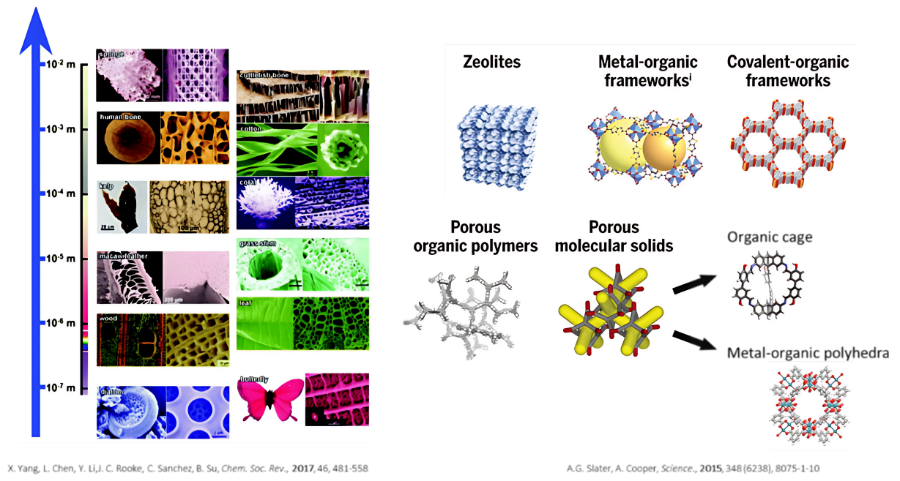
Porous materials includes:
- porous carbon,
- zeolites,
- metal organic frameworks (MOFs),
- covalent organic frameworks (COFs)
- and cages/polyhedral.
Our focus mainly around metal-organic based porous materials. If you are interested, some of these up-to-date journals will provide you more insights.
If you’re interested, the following recent publications may provide more information:
- Function-led design of new porous materials | Science
- The changing state of porous materials | Nature Materials
Metal-Organic Frameworks
MOFs are porous infinite structures that composed of metal nodes (i.e. paddle wheel and cluster) and organic linkers (i.e. carboxylate and N-donor ligands) via coordination bonds. Owing to the specific coordination number of metal ions and the geometry of organic linkers. MOFs can be designed following the reticular chemistry and can be functionalised for desired applications.
Recommended sources:
- Introduction to Metal–Organic Frameworks | Chemical Reviews (acs.org)
- 25 Years of Reticular Chemistry – Freund – 2021 – Angewandte Chemie International Edition – Wiley
Metal-Organic Cages
MOCs (or MOPs) is a discrete cage like supramolecular structures. Similar to MOFs, it is constructed by metal ions and organic linkers but resulting in finite architectures.
Recommended source:
- The rise of metal–organic polyhedra – Chemical Society Reviews (RSC Publishing)
- Assembling metal–organic cages as porous materials – Chemical Society Reviews (RSC Publishing)
Porous Liquids
Porous liquid is a new class of materials that was invented in 2007. It has permanent intrinsic porosity in the liquid phase and classified into 3 types. Type 1 PL is the direct liquification of porous solid into liquid via post-functionalisation. Type 2 PL involves the dissolution of porous solid into liquid media and Type 3 PL is the dispersion of porous solid into liquid media. Until recently, a Type 4 PL has been developed, which is the melting of porous solid without losing all the porosity.
- Typ 1 – is the direct liquification of porous solid into liquid via post-functionalisation
- Typ 2 – involves the dissolution of porous solid into liquid media
- Typ 3 – is the dispersion of porous solid into liquid media
- Typ 4 – has been developed, which is the melting of porous solid without losing all the porosity
Polecane źródło:
- Porous Liquids: The Next Frontier – ScienceDirect
- Porous liquids – the future is looking emptier – Chemical Science (RSC Publishing) DOI:10.1039/D2SC00087C
Porous gels
Porous gel is a continuous microscopic structure with macroscopic dimensions that is unchanged over a period of time and possesses rheologically solid-like behaviour despite being liquid.
Recommended sources:
- Pore-Networked Soft Materials Based on Metal–Organic Polyhedra | Accounts of Chemical Research (acs.org)
- Hierarchical porous metal–organic gels and derived materials: from fundamentals to potential applications – Chemical Society Reviews (RSC Publishing)
What are macromolecules?
Macromolecules typically composed of numerous of monomers such as polymers or proteins. In biology, they play crucial roles in biological processes. In industry, they impact our daily life. Appropriate design and functionalisation allow implementation of macromolecules in a board range of applications.
Recommended sources:
- Macromolecules, Actually: From Plastics to DNA (Frontiers)
- 100th Anniversary of Macromolecular Science Viewpoint (ACS Publishing)
Group members
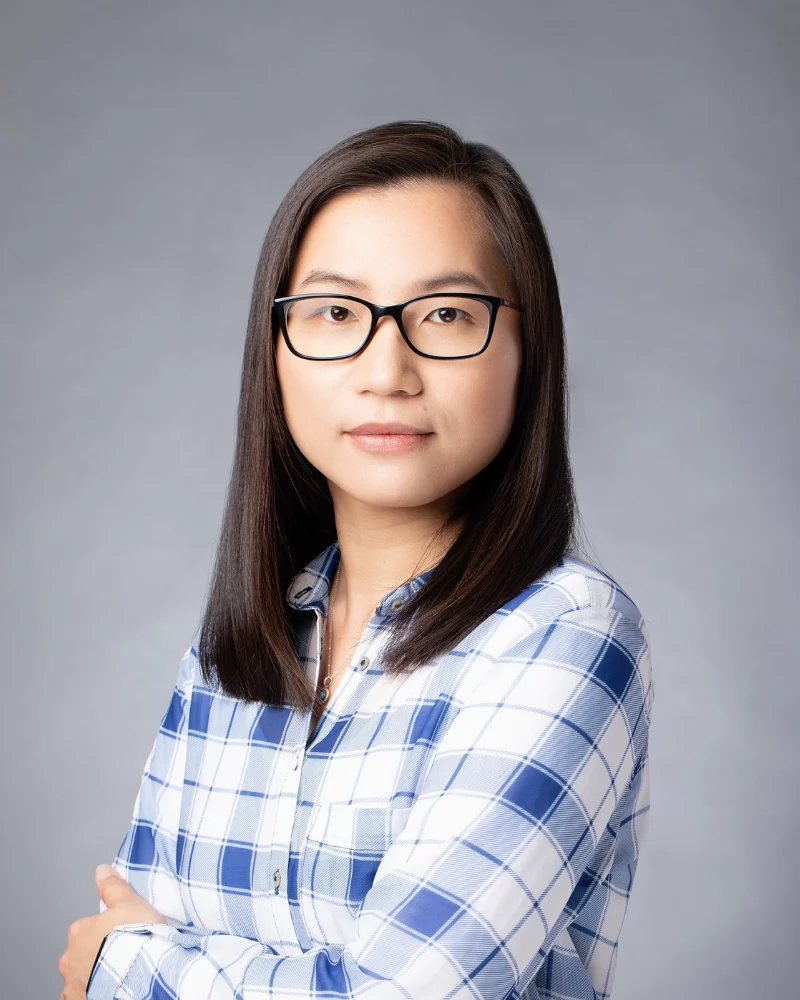
Dr. Min Ying Tsang
I am currently a Junior Principal investigator of the Functional Macromolecules and Porous Materials Group at the at the Łukasiewicz Research Network – PORT Polish Center for Technology Development. I have extensive experience in design, synthesis and application of various materials. Throughout my career, I focused on development of porous materials including metal-organic frameworks (MOFs), metal organic cages, porous liquids, and lanthanide-based materials and investigate the application potential including water splitting photocatalysis, carbon capture, optical sensing, sensing and germicidal study.
From studying the fundamental phenomenon, I am interested to seek for solutions to create functional porous materials. My international research experience in different countries (Hong Kong, Spain, UK, Japan, Austria, Poland) and participation in national and international conferences also earned me scientific networks from different countries and contacts in cross-disciplinary teams for potential international collaborations and in joint funding acquisitions.
My experience in industrial research and complementation with Master of Business Administration (MBA) degree has also earned me solid experience in technology transfer, commercialisation and outreach to commercial sector in efforts to establish collaborations with industrial partners. Currently, I hold two US patents and more than 20 top-ranked journals. I am also a member of EUROMOF international committee and EU4MOFs COST action.
As the leader of the research team, I aim to integrate the multidisciplinary research background of each team members with my vision on implementation of porous materials to tackle current challenges in environmental issues and advance technology development.
Paweł Cwynar
I graduated from Wroclaw University of Science and Technology and from the French University Ecole Normale Superieure de Paris-Saclay. In Wroclaw I studied materials science and in Paris – nanobiophotonics, as a part of the Erasmus Mundus Master Programme. I started working at Łukasiewicz – PORT in September 2020 as a process engineer and later I have started a PhD in the field of sensors for bioactive impurities of water.
Currently, I am working on the development of material for the detection of biologically active water contaminants such as the Bisphenol A(BPA), that is a commonly known endocrine disrupting chemical(EDC). Earlier, I was advancing the one-pot synthesis to facilitate fabrication of sequence-defined oligomers and polymers. Owing to previous projects I have got hands-on experience in organic chemistry, chromatography and mass spectrometry, while right now I am learning more skills in optical spectroscopic field.
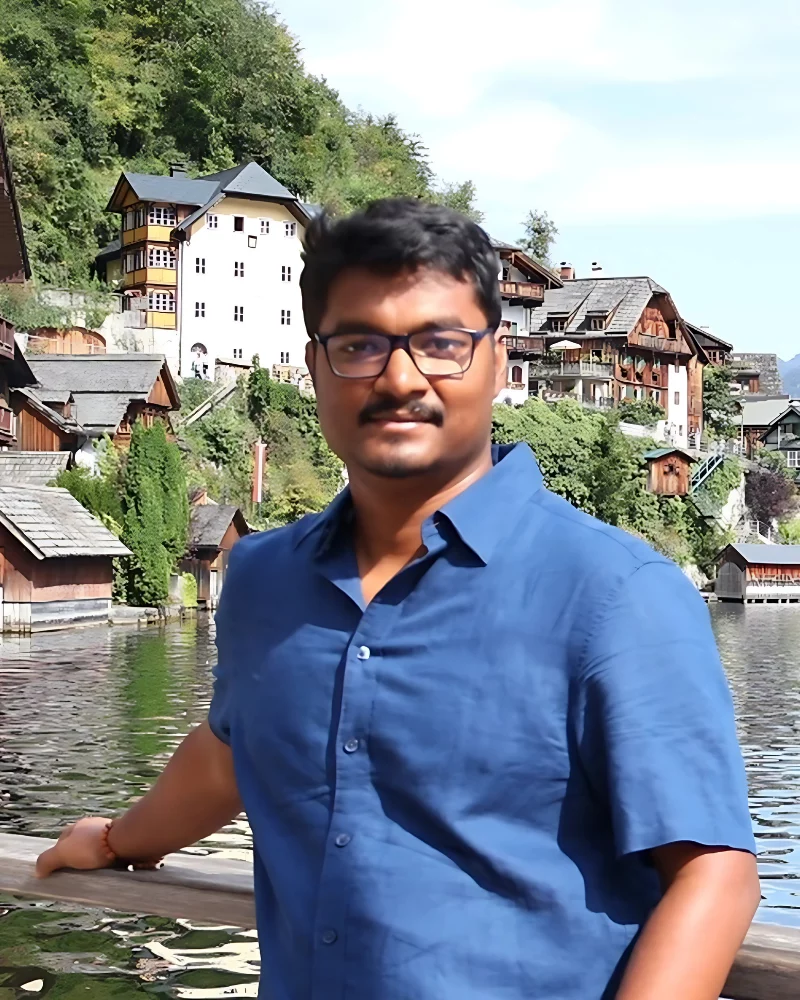
Dr. Tapendu Samanta
As a synthetic organic chemist specializing in polymer chemistry, my research centers on designing innovative monomers and polymerization techniques to explore and tailor the physicochemical properties of resulting materials for impactful applications. Initially, my work focused on creating fluorogenic and chromogenic polymeric materials as advanced sensing platforms for detecting environmental pollutants.
Building on this foundation, I shifted towards sequence-defined polymer synthesis, employing both conventional synthetic methods and automated synthesizers to achieve precision and control. My current research emphasizes novel synthesis strategies for sequence-defined stereo-controlled oligomers, allowing for fine-tuning of properties for specific uses.
Additionally, I am exploring the synthesis of ligands for metal-organic frameworks (MOFs) with adaptable luminescent characteristics. Looking ahead, my goal is to develop polymeric materials with transformative potential in biomedical fields, particularly for bioimaging, drug delivery, and cancer theranostics, ultimately aiming to bridge fundamental research with real-world applications in healthcare and environmental solutions. The purpose of my scientific activity is to advance the synthesis and application of functional materials.
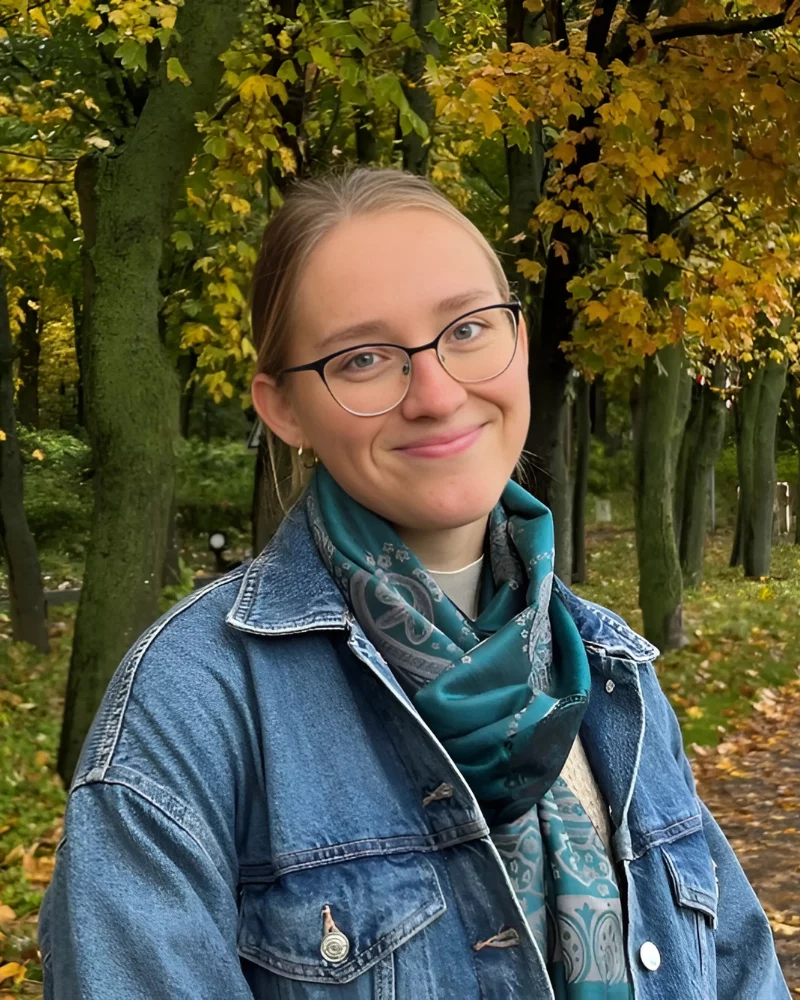
Aleksandra Gerszendorf
I graduated from Worclaw University of Science and Technology with a Master’s degree in Chemistry and Materials Engineering, specializing in Advanced Nano- and Biomaterials and a Bachelor’s degree in Technical Physics. After graduation I worked as an intern and researcher at the University of Porto and I was involved in the project: “Solar green hydrogen fuel Flexi-PEC’s: Flexible photoelectrochemical cells for water splitting”.
My previous research work concerned nanostructured porous materials for application in water splitting and green hydrogen production. I specialized in nanostructured carbon materials for electrochemical water splitting and later I focused on hematite nanoparticle layers for photoelectrochemical water splitting. Currently I am continuing my research in the field of porous materials, focusing on synthesis and development of metal-organic frameworks (MOFs) and exploring their tunable properties.