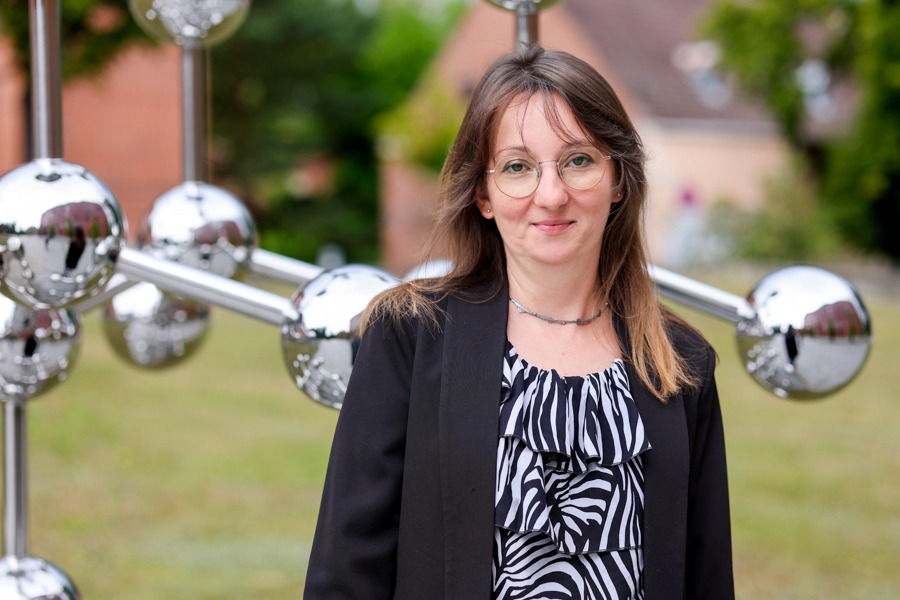
The paradox of modern times is that we can extend life expectancy, yet the brain does not always keep pace with maintaining its functional capacity. Societies are ageing, and with advancing age the risk of neurodegenerative diseases increases. Projections are alarming: the number of people living with Alzheimer’s disease is expected to double by 2050. “This is a civilisation-level problem that is growing exponentially,” says Dr Agnieszka Krzyżosiak, Head of the Neurodegeneration Mechanisms Research Group at Łukasiewicz – PORT.
Pathological proteins inside neurons
Neurodegenerative diseases remain almost entirely incurable. Despite progress in innovative approaches—therapeutic antibodies, gene therapies—medicine still does not have a definitive solution. Understanding the underlying mechanisms is therefore essential.
“In most cases, these are not hereditary diseases. Age is by far the strongest risk factor,” explains Dr Krzyżosiak. A common denominator across many disorders is the accumulation of pathological proteins inside nerve cells.
Healthy cells rely on an advanced protein quality-control system: faulty proteins are removed, allowing the cell to maintain balance. In diseased neurons this system breaks down. “Proteostasis becomes disrupted, and toxic protein aggregates accumulate, ultimately leading to neuronal death,” she says.
This process is a central focus of the team’s research. “If we can strengthen protein-quality control pathways and stop pathological protein build-up, we may be able to slow the progression of neurodegenerative diseases.” Her group also seeks biomarkers—early warning signals detectable in blood or cerebrospinal fluid. “We aim to detect these diseases as early as possible and link clinical data with laboratory findings.”
Reprogramming cells
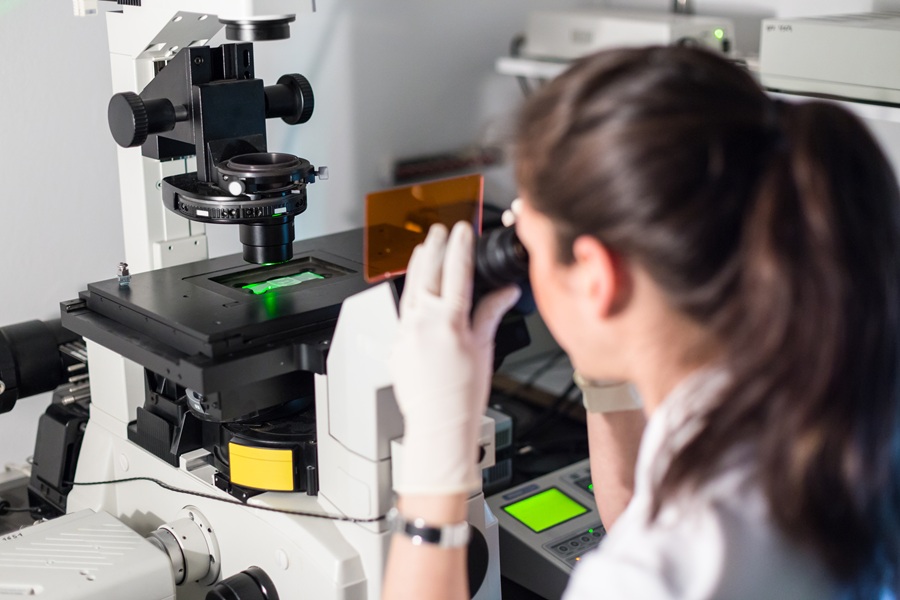
Modern science offers increasingly powerful tools to do so. “We focus on modelling diseases using human cells,” says Dr Krzyżosiak. Her team develops models based on directly reprogramming patient-derived fibroblasts into neurons.
“It is a breakthrough approach because the resulting neurons retain the patient’s biological age—and age is the major risk factor.”
These models allow researchers to observe disease processes in an environment far closer to human biology than traditional animal models. Patient-derived cells preserve the individual’s genetic background and maintain age-related transcriptional and epigenetic signatures. This enables scientists to investigate how disease unfolds specifically in the ageing human brain.
Dr Krzyżosiak’s experience shows that laboratory discoveries can lead to real therapeutic advances. During her fellowship in Cambridge, her team identified a compound that strengthens the cell’s natural defence mechanisms and alleviates symptoms in models of neurodegenerative diseases. “What began as basic research is now in Phase II clinical trials for ALS,” she notes.
However, the path from discovery to therapy requires more than science alone. “Commercialisation is always extremely challenging. My time in Cambridge showed me how essential networking and a supportive biotech ecosystem are for translating discoveries into real applications,” she adds.
The researcher also emphasises that progress depends on the involvement of patients and society. “Medical data and biological samples are incredibly valuable. They allow us to understand diseases better—and all procedures are fully anonymised.”
Conversations about brain health
According to Dr Krzyżosiak, each of us can influence our brain’s condition. “Lifestyle matters. Poor diet, lack of physical activity or chronic overstimulation put strain on neurons. Intellectual engagement in older adults—even something as simple as solving crossword puzzles—helps maintain brain plasticity.”
In just a few days, Wrocław will host one of the most important national events for neuroscientists—the Congress of the Polish Society for Neuroscience (PTBUN). Dr Krzyżosiak is looking forward to it: “The scientific level of the congress is very high. It brings together researchers from multiple disciplines, and multidisciplinarity is key if we want to understand disease mechanisms and design effective therapies.”
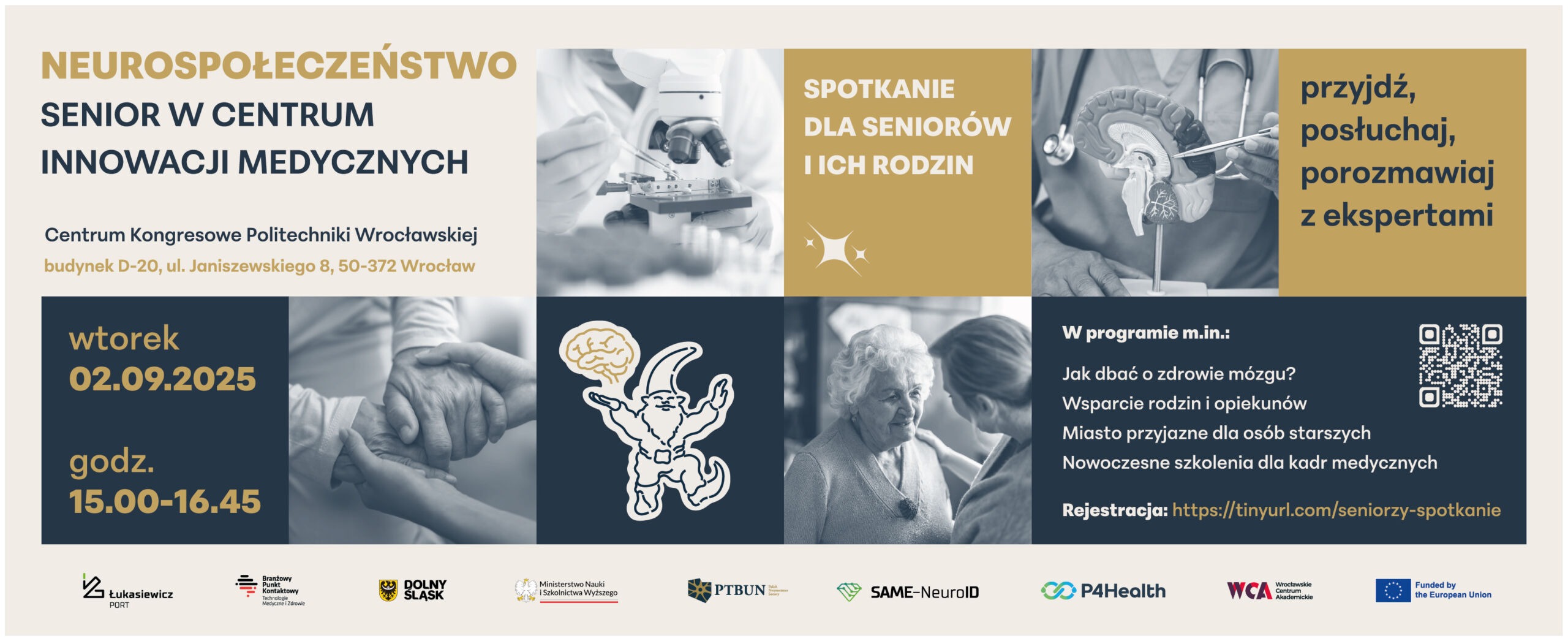
She highlights the public panel on ageing and dementia, “Neurosociety: Seniors at the Centre of Medical Innovation”, which will take place on 2 September, 15:00–16:45, at the Wrocław University of Science and Technology Congress Centre (Janiszewskiego 8). Residents of Lower Silesia, older adults and their families will have an opportunity to talk with representatives of local authorities, clinicians and researchers.
“It is crucial that these discussions involve not only scientists, but also patients and the wider community—because ageing is an issue that affects us all,” stresses Dr Krzyżosiak.