Breast cancer remains the most frequently diagnosed malignant tumor among women worldwide and in Poland. According to estimates from the World Health Organization and the National Cancer Registry, more than 25,000 new cases are diagnosed annually in Poland, and the lifetime risk of developing the disease is approximately 12.5%.
This means that statistically 1 in 8 women will face breast cancer. Despite significant advances in diagnostics and therapy, breast cancer continues to be one of the leading causes of cancer-related mortality among women. Further improvements in prevention, early detection, and combined treatment strategies are essential. At Łukasiewicz – PORT, we combine biobanking, AI, and breakthrough research technologies to accelerate progress in the fight against breast cancer.
Biobank – the Foundation of Modern Research
One of the pillars of the research infrastructure at Łukasiewicz – PORT is the Biobank Research Group—one of the oldest, most technologically advanced, and certified units of its kind in Poland. Led by Dr. hab. n. med. Patrycja Gazińska, it plays a key role in translational and implementation-oriented biomedical projects.
The biobank systematically collects and secures high-quality biological material—especially tissue samples—linked to comprehensive clinical, demographic, and epidemiological data. Such integrated resources form the basis for biomarker validation studies, the development of new diagnostic tools, and the analysis of molecular mechanisms of pathogenesis, particularly in oncology.
The group integrates modern research technologies from experimental pathology with biobanking, data analysis, artificial intelligence, and omics technologies. This synergy enables comprehensive translational research, including in breast cancer.
Through close collaboration with leading scientific and clinical centers in Poland and abroad, the team participates in projects with high innovation potential and implementation value, supporting the development of modern precision medicine.
As Dr. hab. n. med. Patrycja Gazińska emphasizes, meaningful participation in international application-oriented research projects requires not only properly secured biological material but also full clinical context:
“This is a priceless gift from patients and clinicians—valuable for science today and for future generations tomorrow—enabling new discoveries and the development of innovative therapies.”
Artificial Intelligence – A New Dimension of Biomedical Research
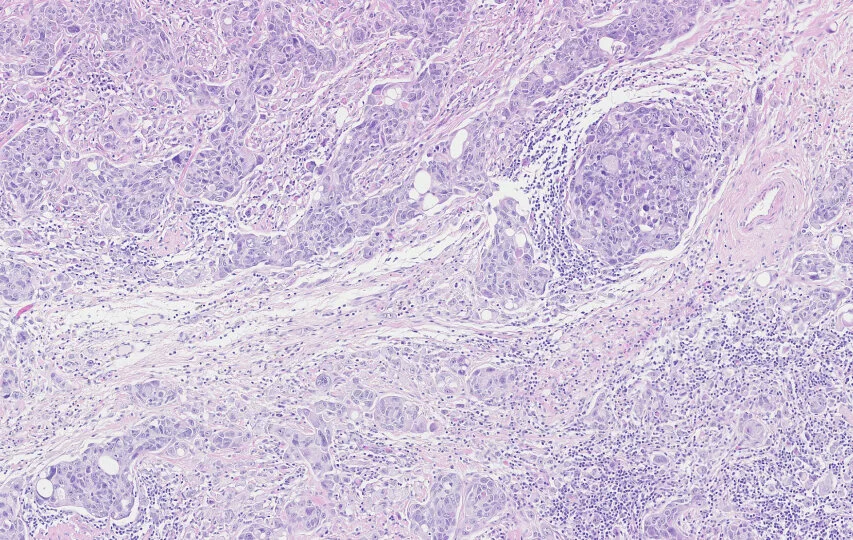
Using biobank resources, research teams at Łukasiewicz – PORT apply advanced AI and machine learning methods to analyze digital histopathology images. These technologies reveal subtle morphological features often imperceptible in conventional microscopy, significantly enhancing diagnostic precision.
At the same time, advanced spatial pathology methods are being developed, integrating morphology with molecular profiling. Technologies such as spatial transcriptomics and spatial proteomics allow mapping gene and protein expression directly within the tissue architecture. Integrating imaging with molecular data provides a multidimensional view of the tumor microenvironment, enabling the identification of unique cellular interactions and discovery of clinically relevant biomarkers.
In the next step, tissue samples combined with clinical, demographic, and epidemiological data constitute the basis for deep patient phenotyping—detailed biological and clinical characterization. Such integration supports classification of patients in terms of prognosis, risk of progression, and predicted treatment response.
Cancer Pain Treatment
Researchers at Łukasiewicz – PORT also develop projects beyond classical diagnostics.
The team of Dr. Mateusz Kucharczyk investigates tumor neurophysiology, combining neurobiology and oncology to better understand the neural regulation of tumor development and associated pain.
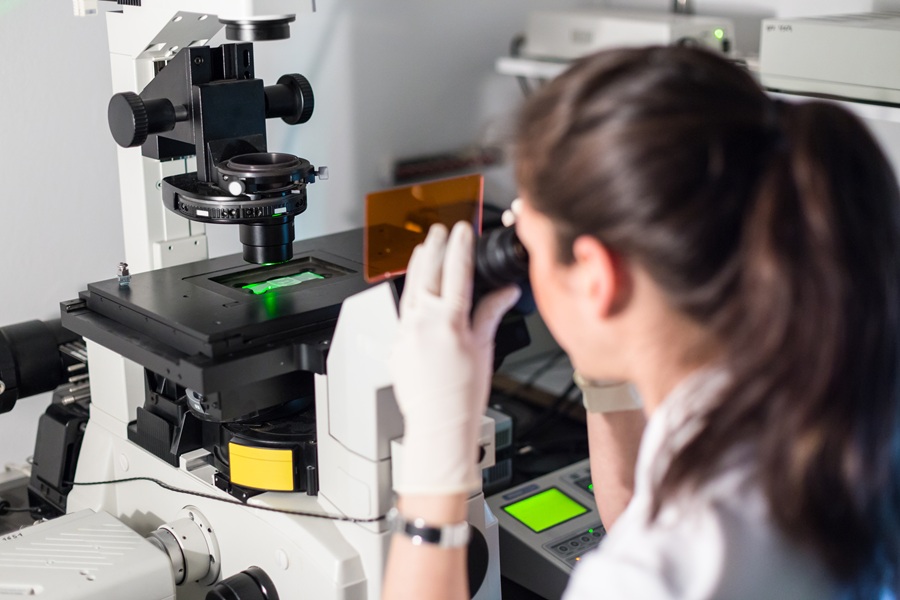
Using state-of-the-art neurophysiological methods (including in vivo optical imaging, electrophysiology, and optogenetics), researchers monitor and modulate the activity of genetically defined neuronal populations to study their influence on tumor biology.
“The nervous system is increasingly recognized as a key regulator of tumor progression. For example, cutting certain nerve branches innervating specific tumors significantly slows tumor growth,” explains Dr. Kucharczyk.
An interdisciplinary team—neurophysiologists, immunologists, and oncologists—uses 3D tumor reconstruction, flow cytometry, RNA sequencing, and high-throughput spectroscopy to understand tumor dynamics and its microenvironment. These efforts may lead to the development of a new class of drugs—simultaneously analgesic and anticancer. Current projects focus on tumors of the breast, lung, and prostate, known for their tendency to metastasize to bone and cause severe, therapy-resistant pain.
Therapeutic Vaccine
The team of Dr. Tomasz Lipiński is developing a therapeutic breast cancer vaccine designed to stimulate the immune system after diagnosis. The project, conducted in collaboration with Vaxican, focuses on viral-like particles (VLPs) displaying the HER2 antigen, characteristic of certain breast cancer subtypes.
The goal is to trigger a natural immune response to help eliminate cancer cells. The vaccine may become a less expensive and less burdensome alternative to monoclonal antibody therapies, marking a significant step toward personalized breast cancer treatment.
The Scale of the Challenge
Breast cancer remains the most commonly diagnosed malignant tumor among women globally and one of the leading causes of cancer mortality. According to the International Agency for Research on Cancer (IARC), 2.3 million new cases and over 660,000 deaths were recorded worldwide in 2022. Epidemiological trends suggest that by 2025 these numbers may exceed 2.5 million cases and 700,000 deaths.
Modern technologies, biobanking, and diverse research directions—from molecular diagnostics and neurophysiology to bioengineering—form an integrated approach to breast cancer research at Łukasiewicz – PORT. However, the key element remains collaboration: with clinicians, hospitals, scientific centers, and patient organizations. Only strong partnerships will allow research to translate more rapidly into real solutions that benefit patients.