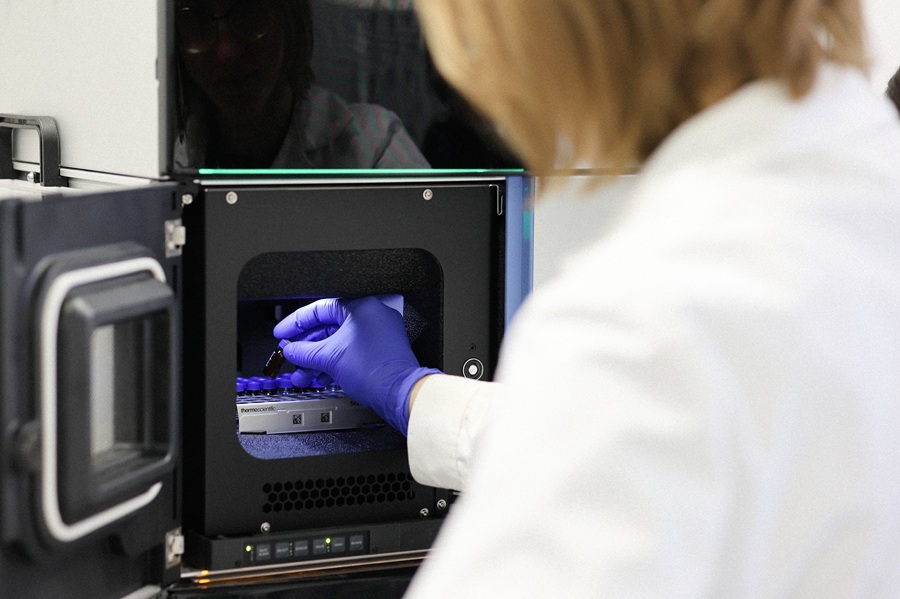
On the occasion of World Breast Cancer Awareness Day, Dr. hab. Patrycja Gazińska, leader of the Biobank Research Group at the Population Diagnostics Center, Łukasiewicz – PORT, explains how modern molecular pathology technologies and biobanking can revolutionize the diagnosis and treatment of breast cancer—the most common malignant tumor in women. Her research, carried out in collaboration with international centers, highlights the enormous potential of these innovative technologies to improve diagnostics, predict therapy outcomes, and personalize patient treatment.
Innovations in Breast Cancer Research
Breast cancer is a complex disease characterized by high biological heterogeneity, which requires the use of diverse classification methods—clinical, pathological, and molecular. This approach enables more precise diagnosis, assessment of disease stage, and better tailoring of therapy to the individual needs of each patient. Molecular pathology plays a key role here, increasingly leveraging advanced technologies such as digital pathology and spatial tissue analysis. These modern methods are crucial for identifying new biomarkers with diagnostic, prognostic, and therapeutic value.
Dr. hab. Patrycja Gazińska, in collaboration with the Research Oncology team at King’s College London, conducts research on aggressive forms of breast cancer, including triple-negative breast cancer (TNBC). This subtype is particularly challenging to treat due to the lack of targeted therapies. Dr. Gazińska participates in research programs focused on patients with residual disease after completion of therapy—where cancer cells persist despite treatment—as well as patients with metastatic disease, in which the cancer has spread to other organs. Understanding the tumor microenvironment, including the role of immune system cells, is essential, as these factors significantly influence disease progression and the body’s response to treatment.
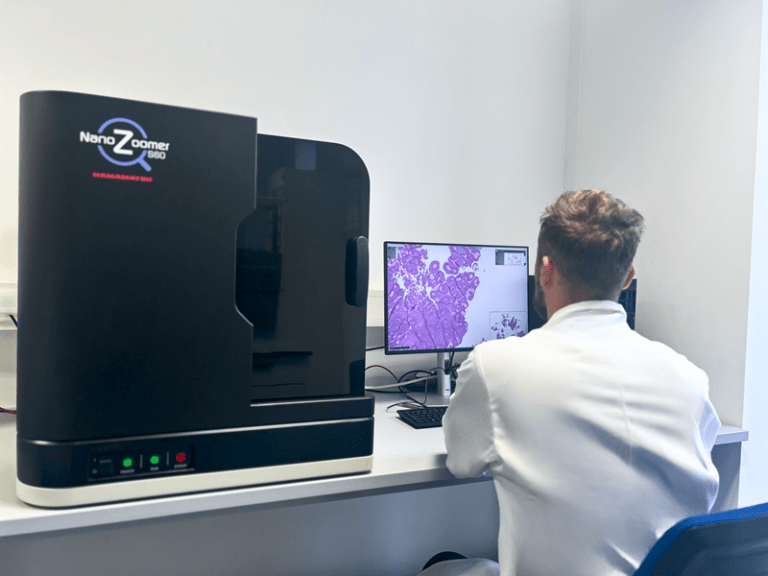
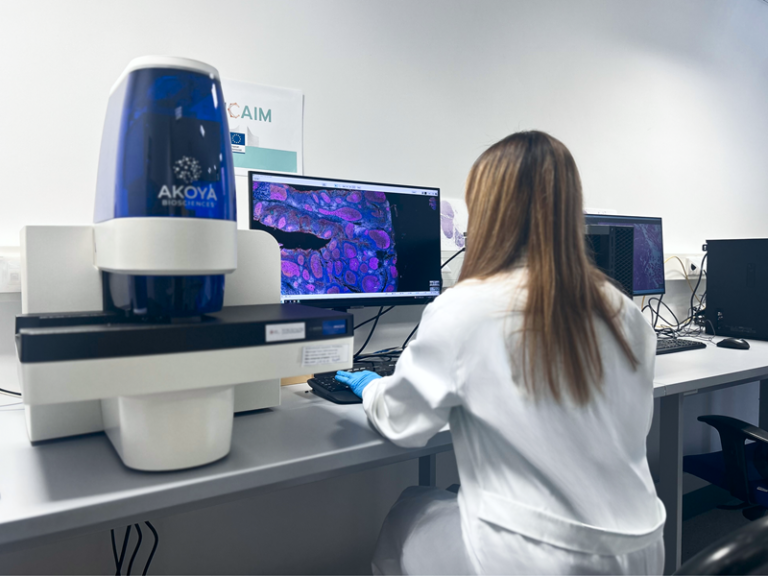
Molecular pathology, supported by advanced technologies such as digital pathology and spatial analysis, is transforming breast cancer diagnostics and research. Spatial phenotyping and transcriptomics enable precise mapping of the tumor microenvironment and identification of so-called “cellular neighborhoods.” These neighborhoods describe the relationships and interactions between different cell types within tissues, allowing for a deeper understanding of tumor microenvironment dynamics and the impact of immune cells on cancer development. Such analyses are key to identifying new therapeutic targets and may contribute to the development of personalized treatment strategies.
Digital pathology, through the digitization of histological slides, enables not only remote diagnostics but also integration with artificial intelligence (AI) algorithms. The use of AI accelerates image analysis, automates the detection of pathological changes, and identifies signatures of potential clinical relevance. Thanks to these innovative technologies, it is possible not only to achieve more accurate diagnoses but also to develop more effective therapies based on the specific characteristics of the tumor microenvironment.
These breakthrough technological solutions—integrating molecular, spatial, and digital research—are driving progress in breast cancer diagnostics and treatment, increasing therapeutic effectiveness and the personalization of medical care.
Biobanking in Modern Oncology
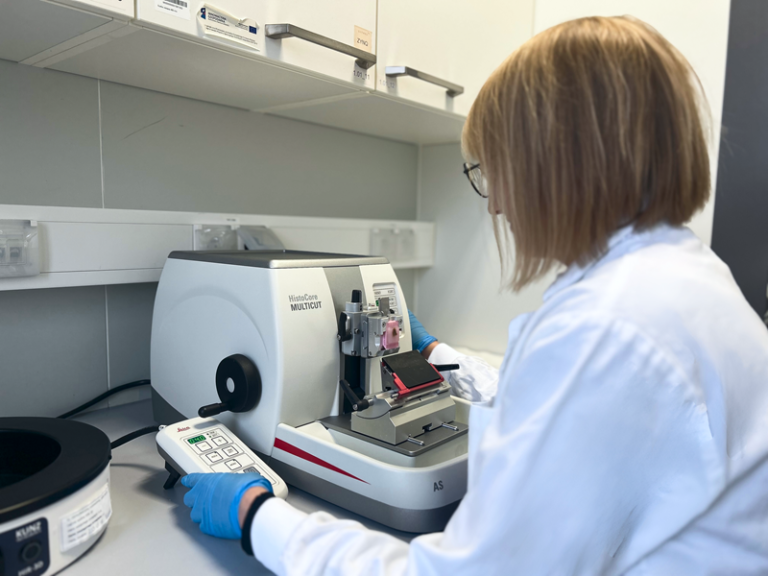
One of the key areas of Dr. Gazińska’s work is the development of biobanking—a process involving the collection and storage of biological material and patients’ clinical data. At the Łukasiewicz – PORT Biobank, an oncology collection is being established that will play a crucial role in future breast cancer research. International studies using biobank collections will enable the identification of significant ethnic differences and individual patient predispositions, supporting the development of personalized medicine, in which therapy is tailored to a specific disease profile.
Biobanking plays a vital role in modern oncology by enabling large-scale, international research that accounts for genetic and demographic diversity among patients. An interdisciplinary approach that combines science, advanced technologies, and close collaboration with clinicians opens new opportunities in breast cancer diagnostics and treatment. This approach offers hope for the development of more effective and highly individualized therapies that can respond to the growing needs of patients.
Modern technologies in molecular pathology, together with the advancement of biobanking, have the potential to revolutionize the fight against breast cancer. Through these innovations, both national and international research centers can contribute to progress in personalized medicine, significantly improving treatment effectiveness and the quality of life of breast cancer patients. This represents an opportunity for patients to contribute today to the development of future therapies that may help others—an inspiring and meaningful step in the fight against the disease.