Medicine still lacks sufficiently effective tools that would allow for fast and accurate diagnosis of patients with neuropsychiatric disorders. For this reason, scientists at Łukasiewicz – PORT aim to better understand the abnormalities in brain function that lead to these conditions.
Within the SAME-NeuroID project (Standardized Approaches to Modeling and Examination of Neuropsychiatric Disorders), funded by the Horizon Europe programme, the researchers have set themselves the following goal:
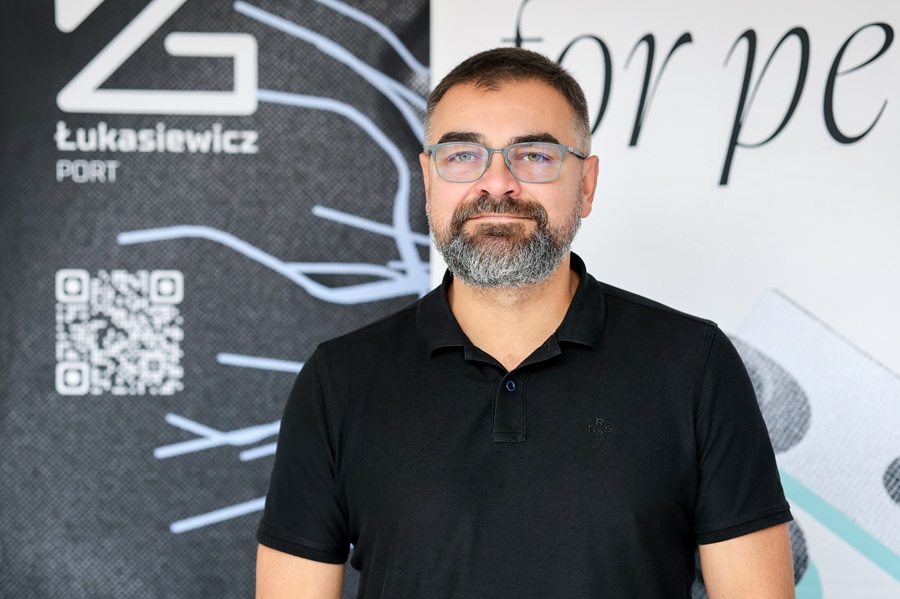
– to develop standardized methods for studying neuropsychiatric disorders that enable comparison of results across different laboratories – explains Dr hab. Witold Konopka, project coordinator.
A better understanding of brain disorders, and consequently the development of improved diagnostic methods, more effective therapies, and care tailored to psychiatric patients – how do scientists plan to achieve this? Together. SAME-NeuroID is an international initiative of Łukasiewicz – PORT and leading European neuroscience centers: the Paris Brain Institute, the Max Planck Institute of Psychiatry in Munich, and Erasmus Medical Center in Rotterdam.
– Symptoms of mental disorders have diverse biological backgrounds. Each of them may result from dysfunctions in different groups of brain cells – emphasizes Dr Michał Ślęzak, leader of the Astrocyte Biology Research Group. He points out that it is crucial to develop shared methods for examining several specific biological parameters, including those related to depression. Within the project, studies are conducted in an identical manner across different institutions, which provides a solid basis for reliable testing of new drugs.
Łukasiewicz – PORT employs advanced technologies such as cellular “reprogramming,” in which patients’ somatic cells (e.g. skin cells) are transformed into brain cells. Such models make it possible to study cellular deficits and brain dysfunctions under controlled laboratory conditions.
Valuable insights are also provided by analyses of animal behavior. Long-term observations under strictly defined conditions, combined with analysis of recordings using artificial intelligence–based tools, generate vast amounts of data which, after appropriate processing, contribute to a better understanding of neuropsychiatric disorders.
The goals of the SAME-NeuroID project and the pathway toward developing more effective diagnostic tools that could eventually be used in psychiatric and therapeutic practices worldwide are presented in a newly released promotional video for the project.
In addition to its research objectives, the SAME-NeuroID project also offers workshops, training sessions, and conferences for scientists, providing opportunities to deepen knowledge on the commercialization of scientific discoveries and the practical aspects of implementing innovations in neuropsychiatry.