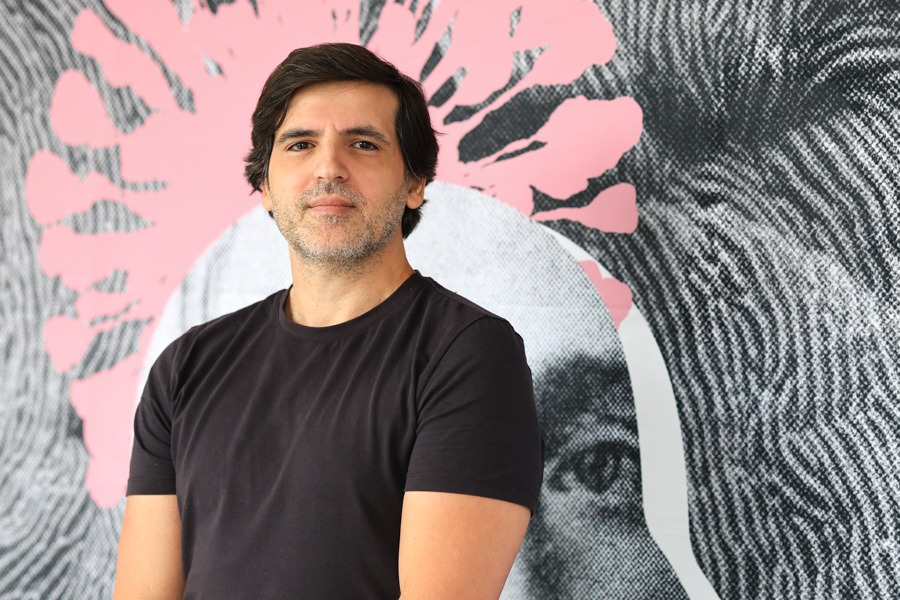
Prof. Jarosław Serafińczuk, a member of the Advanced Semiconductor Epitaxy Research Group, has been awarded the title of professor in the fields of materials engineering and automation, electronics, electrical engineering, and space technologies. Prof. Serafińczuk combines his work at Łukasiewicz – PORT with his duties at Wrocław University of Science and Technology, in the Department of Nanometrology at the Faculty of Electronics, Photonics and Microsystems, and as he says himself, receiving the professorial title has not slowed him down. He specializes in high-resolution X-ray diffraction in materials research. This is one of the fundamental analytical methods, allowing scientists to observe changes in fabricated materials on a scale smaller than the distance between atoms.
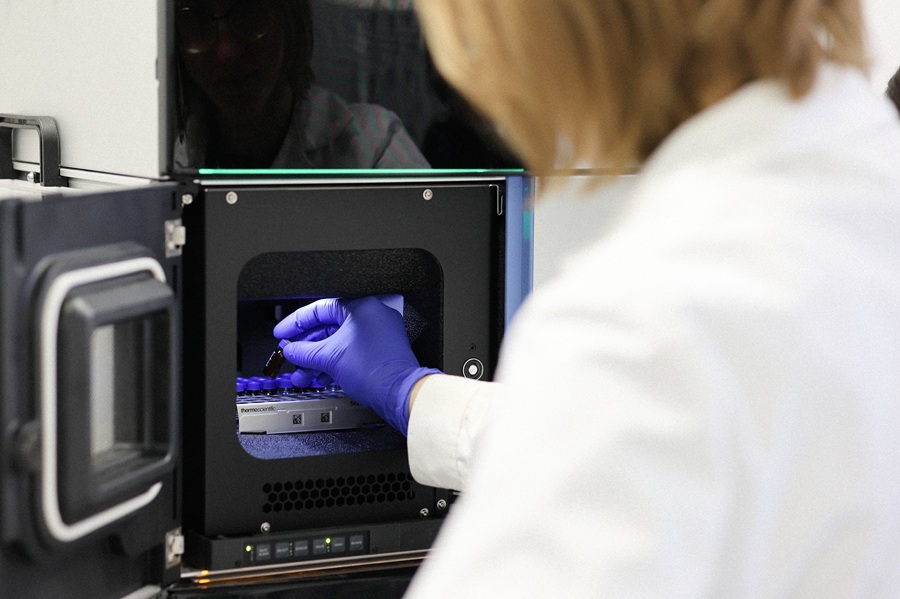
“In today’s electronics, epitaxial layers – specially grown crystals – are widely used. X-ray diffraction is a key method for verifying whether the atoms in these materials are arranged as intended, or whether there are undesired deformations that may affect their functionality,” explains Prof. Serafińczuk. “Especially in electronics and optoelectronics, we must work with materials of the highest quality.”
The professor is also interested in two-dimensional and perovskite materials, which enable further miniaturization of electronics. “A scientist’s work is, above all, about creating inventions and technologies that have a real impact on how we live,” adds Jarosław Serafińczuk.
Initially, the researcher planned to study medicine. When that did not work out, he began studies in electronics and telecommunications. Today, he recalls with a smile: “I always dreamed of becoming a doctor, and in the end I managed to fulfill that dream, although in a completely different field.” He notes that during his PhD, there were only three X-ray diffractometers in Poland, one of them at Wrocław University of Science and Technology. Shortly after completing his doctorate, Prof. Serafińczuk became head of the Wrocław diffraction laboratory.
“At the beginning of a scientific career, no one thinks about a professorship – it seems very distant. Then comes the PhD, the habilitation, and you still want to keep developing,” says the professor.
Combining work at Łukasiewicz – PORT and at the university brings clear benefits – it makes it possible to find students and PhD candidates who may one day join the institute’s research staff. “We have to pass knowledge on to young people so that they can continue to develop it,” says the professor, who supervises PhD, engineering, and master’s theses. He often tells his mentees: “Seize opportunities when they appear. Success does not come immediately – it is the result of hard work and the ability to make use of the chances you get. If something interests you, don’t be afraid to dive deeper and try your hand at it, because it is precisely through experimenting and boldly taking on challenges that you can build your future. When you do research, you are investing in yourself, you grow, you create your own track record – and as the scientist grows, so do their team, their university, their institute, and ultimately the entire community.”