Impairment of blood–brain barrier (BBB) function may represent one of the earliest signs of the development of neurodegenerative disorders such as Alzheimer’s disease, Parkinson’s disease, and vascular dementia. During the seminar, Dr. Mootaz Salman will discuss how inflammation-mediated BBB dysfunction compromises cerebrovascular integrity and how current research seeks to prevent or mitigate these processes before irreversible neurodegenerative changes occur.
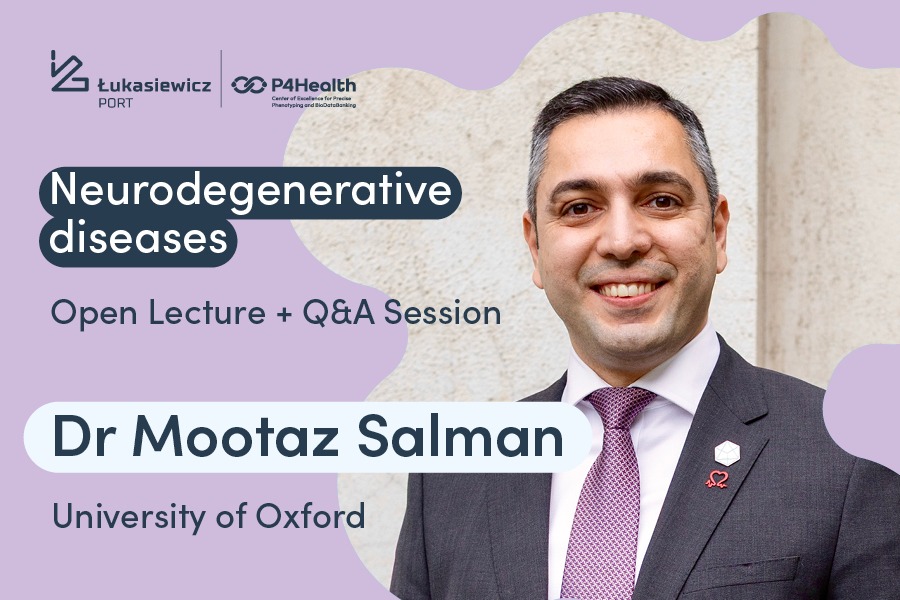
Dr. Mootaz Salman of the University of Oxford, an internationally recognized researcher in cellular neuroscience and vascular biology, will deliver his lecture on March 5 at 2:00 PM in the Łukasiewicz – PORT auditorium. The title of the lecture is: Defining mechanisms of blood-brain barrier dysfunction in neurodegenerative diseases using advanced organ-on-a-chip models.
The speaker will present findings on the mechanisms of inflammation-mediated BBB dysfunction and demonstrate the application of advanced three-dimensional BBB-on-a-chip models (miniaturized microfluidic systems that recapitulate blood–brain barrier function under physiologically relevant conditions). These models, developed using patient-derived induced pluripotent stem cells (iPSCs) and primary human cells, enable detailed analysis of cell–cell interactions and signalling pathways responsible for barrier integrity and function, as well as the identification of molecular therapeutic targets. This approach opens new opportunities for research into the prevention of dementia and other central nervous system disorders.
The seminar will be conducted in English and is open to all interested participants, particularly early-career researchers. Participation is free of charge. A discussion session and networking meeting for PhD candidates and early-stage investigators will follow the lecture.
Dr. Salman is an internationally recognized expert in cellular neuroscience and vascular biology affiliated with the University of Oxford. He leads a research group within the Department of Physiology, Anatomy and Genetics and serves as Principal Investigator at the Oxford British Heart Foundation Centre for Research Excellence and the UK Dementia Research Institute.
His research focuses on endothelial metabolism, neuroimmune interactions, and vascular contributions to dementia. His group integrates patient-derived stem cell technologies, genetic engineering, and advanced microfluidic systems to develop dynamic, three-dimensional, multicellular human BBB and brain-on-a-chip models that accurately recapitulate human disease-relevant conditions, including neuroinflammation and vascular stress.
Dr. Salman has received numerous international awards and distinctions recognizing his contributions to neuroscience and vascular biology.
The seminar is organised within the P4Health project, funded under the Horizon Europe programme.