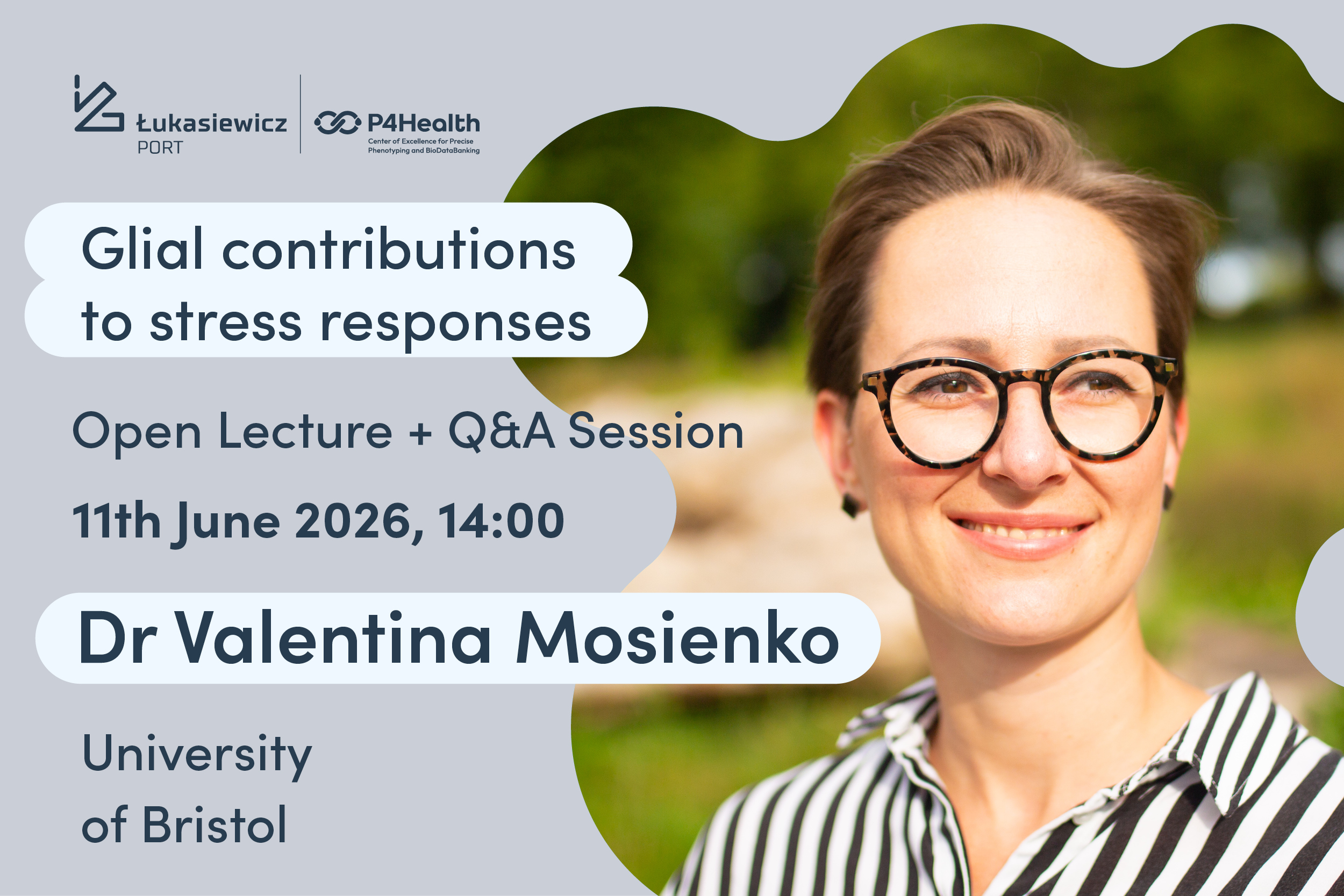
Dr. Valentina Mosienko from University of Bristol will speak on June 11 at 2:00 PM in the Łukasiewicz – PORT auditorium about how stress affects brain function and why glial cells may play a key role in emotional regulation and the action of antidepressant drugs.
Stress-related disorders, including anxiety and depression, are among the most prevalent neuropsychiatric conditions, affecting approximately 8% of the global population. The limited success of current therapies reflects our incomplete understanding of the biological mechanisms underlying stress resilience.
For many years, stress research focused primarily on neurons. Today, however, increasing attention is being paid to astrocytes and microglia – glial cells that support brain function and regulate emotional behavior. Both acute and chronic stress can affect their structure, metabolism, and plasticity, potentially leading to maladaptive responses.
During the seminar, Dr. Mosienko will present findings from in vivo and in vitro studies investigating how stress affects astrocyte and microglial function across different stages of life. She will also discuss the mechanisms of antidepressant action and explain why their effects cannot be attributed solely to modulation of the serotonergic system.
The seminar is open to everyone interested in the brain, stress, and emotional regulation, with a particular invitation extended to early-career researchers and PhD students.
About the speaker
Valentina Mosienko is affiliated with the University of Bristol, where she conducts research and teaches neuroscience. Her work examines the molecular and cellular basis of the stress response and the effects of antidepressants, with a particular focus on the role of astrocytes and microglia.
Previously, she worked at University of Exeter, where she investigated molecular and cellular pathways involved in stress responses. She completed her PhD and early postdoctoral training at Max Delbrück Center for Molecular Medicine in Berlin, combining behavioral testing with molecular and pharmacological approaches to study the role of the serotonergic system in emotional regulation. She is the author of influential publications on the role of serotonin in affective disorders.