Perovskites—found both in nature and produced synthetically—have the potential to transform technologies such as low-cost, high-efficiency solar cells and light-emitting diodes (LEDs). Scientists worldwide are working to improve their durability and performance, while also exploring new fields of application.
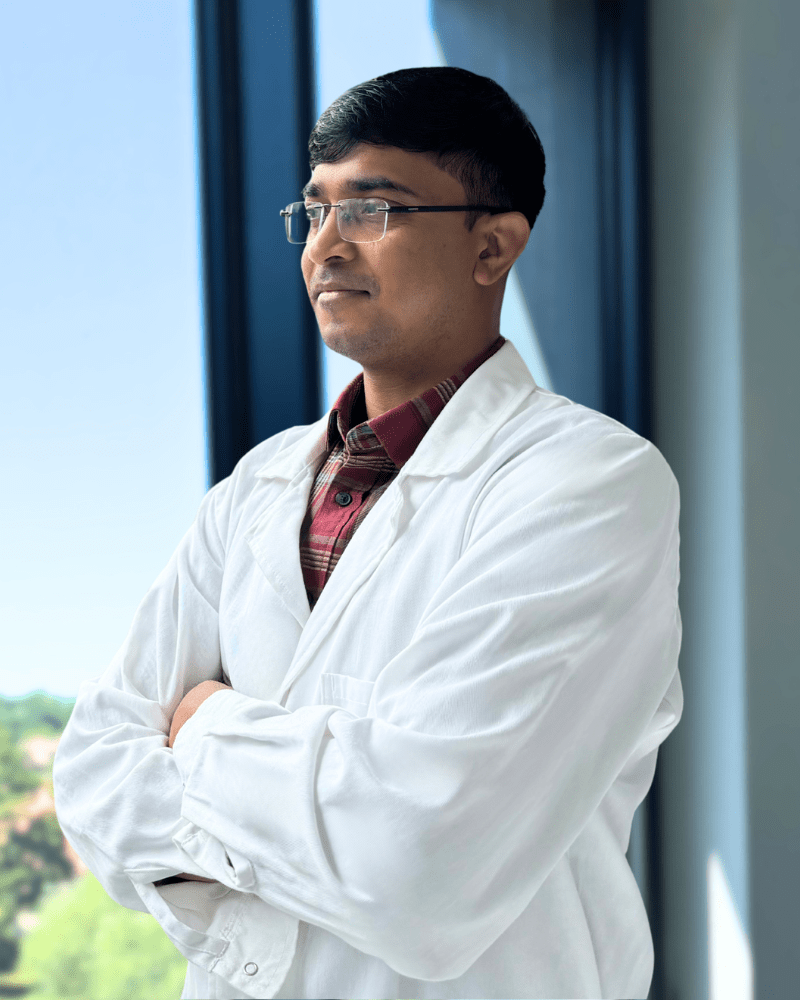
Research led by Dr Somnath Mahato from the Photonics Materials Research Group not only enhances the structural stability of perovskites but also opens the door to their innovative use in patient care. The scientist has developed a flexible perovskite-based LED that emits light capable of accelerating wound healing. While standard treatment takes around 30 days, this solution could reduce recovery time to 15 days or less.
The device can be integrated into a flexible substrate and worn like a medical patch—regardless of the injury’s location.
Dr Mahato joined Łukasiewicz – PORT under the POLONEZ BIS 2 programme to develop flexible LEDs for biomedical applications. His latest work on perovskite quantum-dot LEDs, focused on improving structural stability and light emission—particularly in optoelectronic contexts—was published in Advanced Materials.
from Photonic Materials Research Group
Light that heals
The current direction of Dr Mahato’s research goes far beyond traditional perovskite applications.
“Our concept is inspired by a 2017 Science article showing that wound healing progresses faster during the day than at night, because light supports regeneration,” he explains. “I am focusing on the emission of different colours of light, especially red and near-infrared, which—according to medical research—can accelerate healing and have other biomedical uses.”
Perovskite-based “light patches” could be particularly beneficial for older adults, patients with diabetes, and athletes in need of rapid recovery.
Stable quantum dots
Researchers are working to achieve the right intensity and duration of light emission, with a focus on red and near-infrared wavelengths, which penetrate tissues more deeply than blue or green light. Biomedical uses of perovskites are emerging—until recently these materials were associated primarily with display technologies.
Within an international collaboration, Dr Mahato and fellow scientists have developed a method for producing stable quantum dots with bright red light emission. The team created a new synthesis process in which part of the bromine atoms were replaced with iodine and introduced specific materials-engineering techniques, increasing the brightness of emitted light by up to 80%.
They also analysed structural defects affecting conductivity and stability—finding that when properly controlled, such defects can actually facilitate charge transport.
These advances pave the way for new flexible, durable and efficient perovskite materials—not only for foldable displays and next-generation electronics but potentially also for biomedical light-emitting bandages. The topic has already gained attention in international scientific and industry media, including Phys.org, Perovskite-Info, and Nanowerk.
TITAN – a microscope that sees atoms
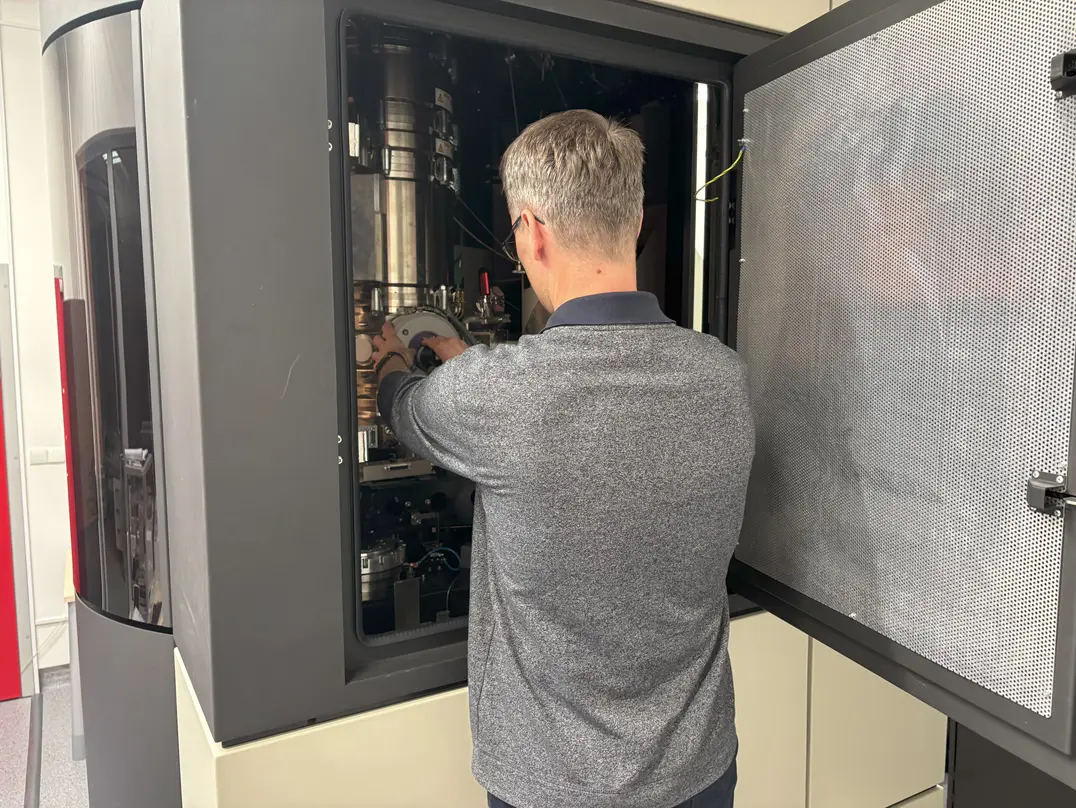
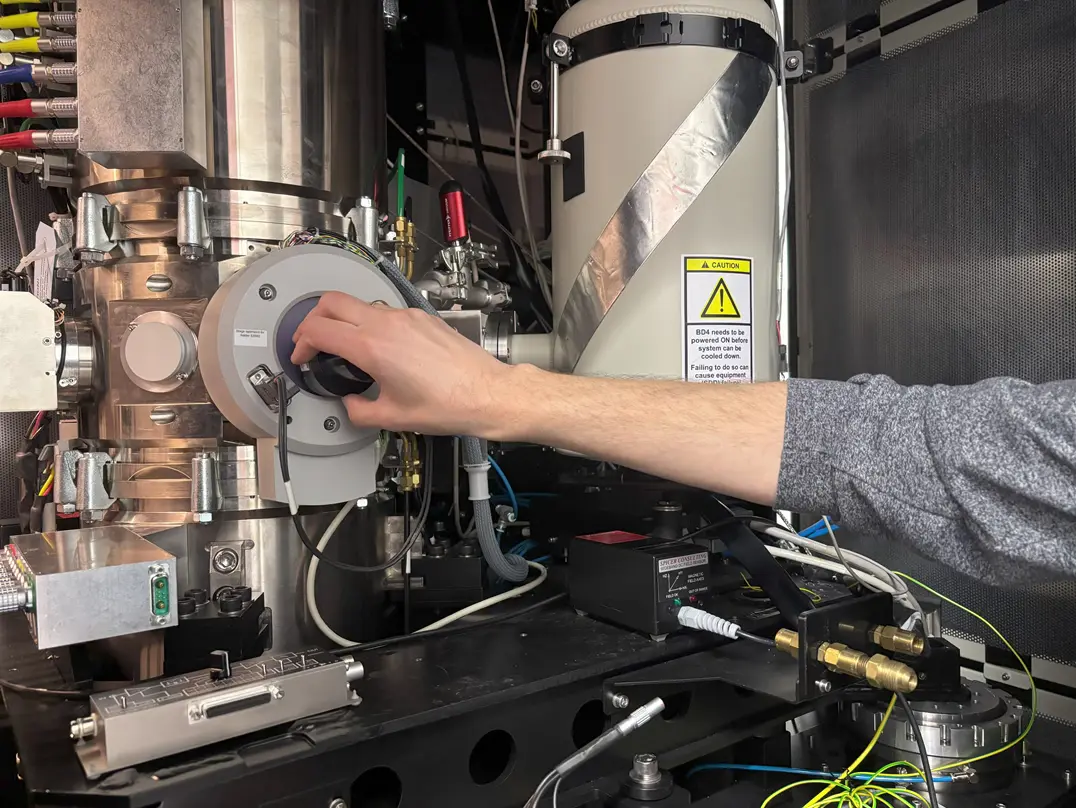
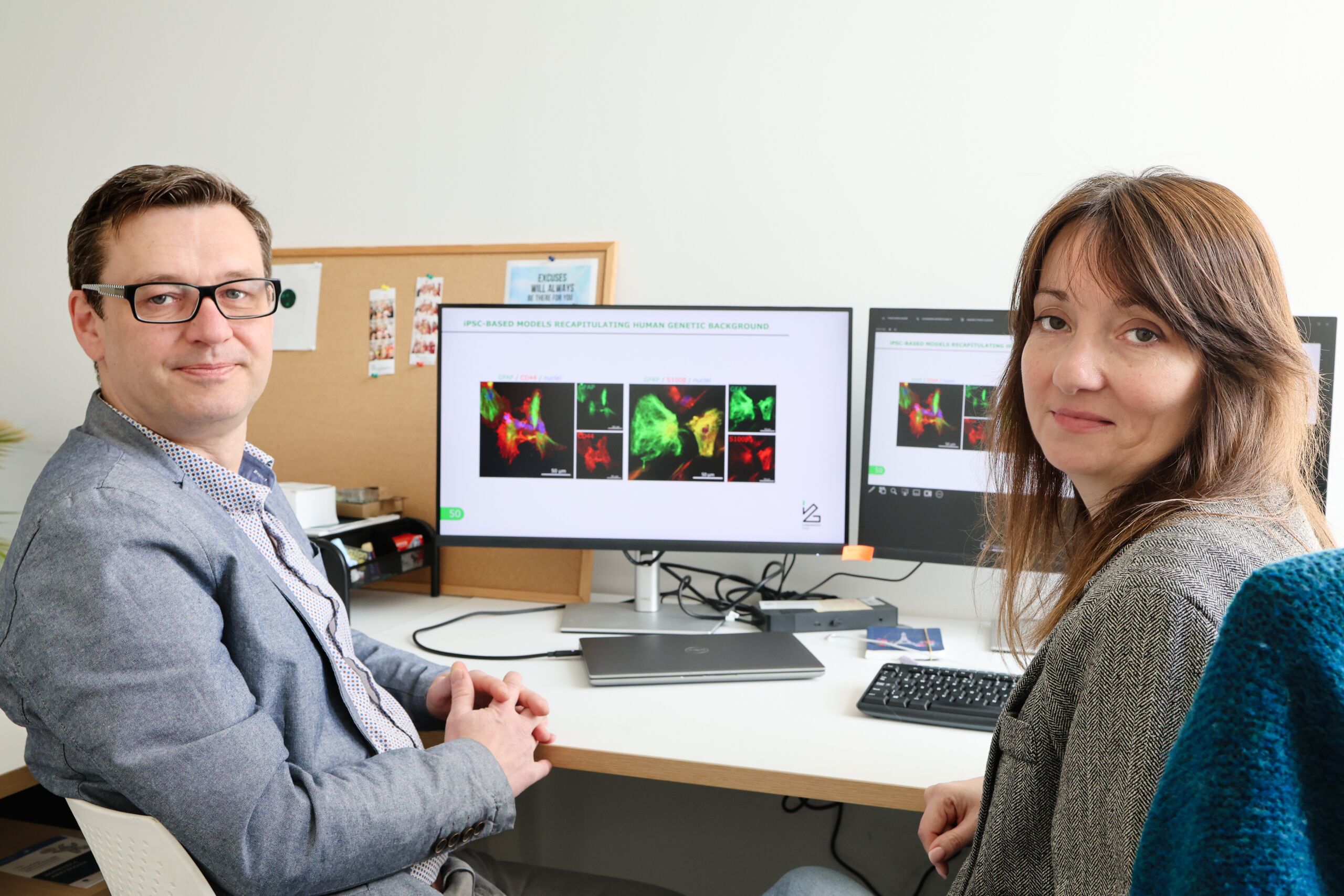
A key tool in this research is the TITAN KRIOS transmission electron microscope at Łukasiewicz – PORT, which enables the observation of materials at the scale of individual atoms. Operating equipment of this class requires deep expertise.
“Calibration alone takes several days, and sample preparation even longer,” says Dr Sebastian Arabasz, electron microscopist at Łukasiewicz – PORT.
Until recently, this microscope was the only instrument of its kind in Poland. It operates in a dedicated building with a floating floor and a water-cooled wall system.
“Electron microscopy is approaching the physical limits of what can be seen—no one will observe finer details. It is truly an adventure at the atomic scale,” adds Dr Arabasz.
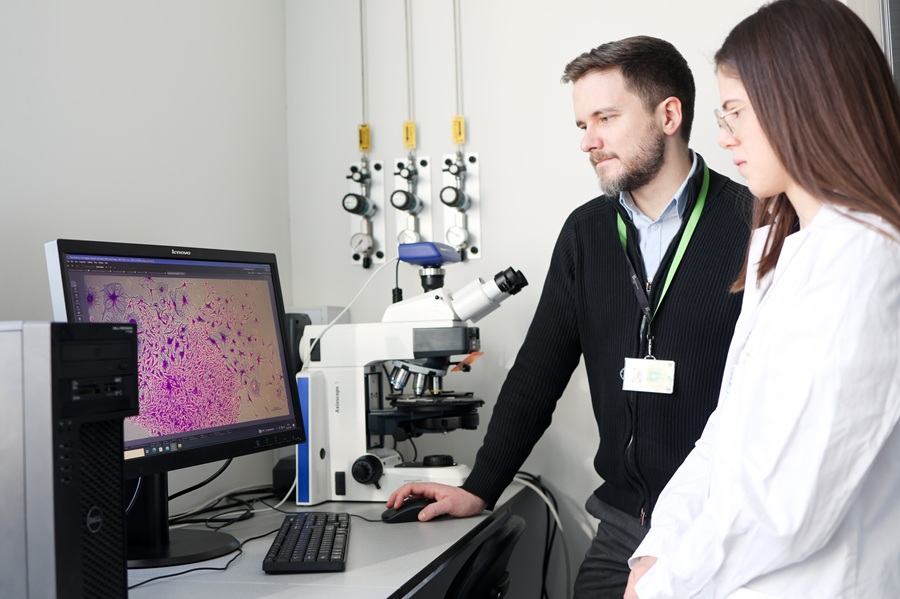
To maximise the chances of bringing perovskite wound-healing patches to market, researchers from the Materials Engineering Centre are already collaborating with colleagues from the Life Sciences and Biotechnology Centre—demonstrating that breakthrough innovations are born where disciplines intersect.