February 19 marks Polish Science Day – established on the anniversary of Nicolaus Copernicus’s birth and honoring the achievements of successive generations of researchers. At Łukasiewicz – PORT, we view Polish science within a broad international context.
Polish science – like any other – is part of an interconnected system in which success is measured not by individual achievements, but by the capacity for effective collaboration within international consortia. It is a system in which the challenges are shared across the entire European Research Area, and in which the societal problems that science is meant to address are inherently global in scope.
Internationalization as a daily operational standard
Participation in the European grant system is no longer a mark of prestige – it has become integral to conducting research at a competitive level. Implementing projects under programs such as Horizon Europe, the European Research Council (ERC), and the European Innovation Council (EIC) reflects long-term institutional and individual development strategies rather than one-off successes.
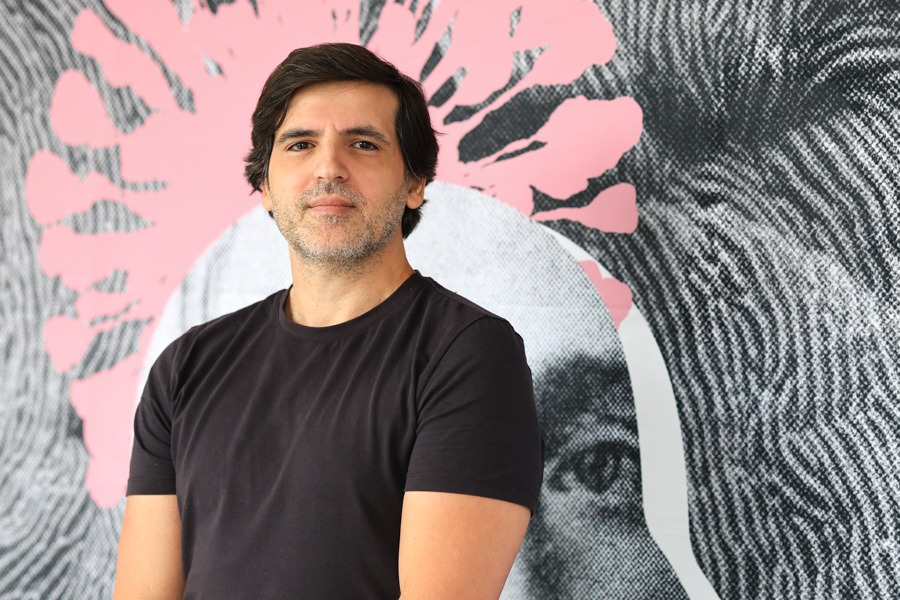
It is within these frameworks that Dr. Mykhailo Batiuk will investigate the biological underpinnings of post-traumatic stress disorder (PTSD), selecting Łukasiewicz – PORT as the host institution for his ERC grant and scientific collaboration. Through the MSCA Postdoctoral Fellowships, Dr. Rohit Shrivastava is advancing early diagnostic tools for Huntington’s disease and likewise chose the Wrocław-based institute as his host. Professor Bastian Hengerer recently assumed leadership of the P4Health Center, working with the Łukasiewicz – PORT team to establish the foundations for precision phenotyping and biobanking of biological data.
Their decision to pursue their work in Poland was driven by access to specific research infrastructure, collaboration with on-site scientists, and opportunities for professional growth – including the ability to conduct translational research that may ultimately translate into new therapeutic approaches.
Transferring knowledge and expertise
The internationalization of Polish science has another dimension as well – researchers who, after years of working at institutions abroad, chose to continue developing their careers and research groups in Poland. Upon returning, they brought to domestic institutions experience gained in other systems, diverse models of work and project management, established professional networks, and opportunities for further international collaboration. Early-career researchers in their teams now benefit directly from their scientific achievements and professional trajectories.
After years of working in the United Kingdom, Dr. Mateusz Kucharczyk chose to build a neurophysiology laboratory from the ground up at Łukasiewicz – PORT, creating a new research environment. Following 15 years of research at institutions including centers in Norway and Japan, Dr. hab. Marek Wagner continues his work on melanoma in Wrocław. After returning to Poland from King’s College London, Dr. hab. Patrycja Gazińska initiated the development of spatial pathology – a field that, until only a few years ago, had not been pursued by any other research group in the country – and began building one of the largest biobanks.
Many other scientists at Łukasiewicz – PORT have followed similar career paths. Today, they serve as research leaders and mentors, and their teams are recognized as equal and attractive partners in international consortia.
Science as a global process
Although at Łukasiewicz – PORT we regard publications as the outcome of our work rather than an end in themselves, the caliber of the journals in which they appear reflects the presence of Polish scientists within the global scientific community. Findings from our teams, published in journals such as Nature, Translational Psychiatry, and Applied Physics Reviews, demonstrate that institutions in Poland meet the highest international standards of scientific excellence.
Publications, competitively awarded grants, international research teams, and strategic partnerships together define our contribution to scientific progress – both in Poland and beyond. It is through the exchange of knowledge and expertise across borders that research initiatives delivering measurable impact are developed.