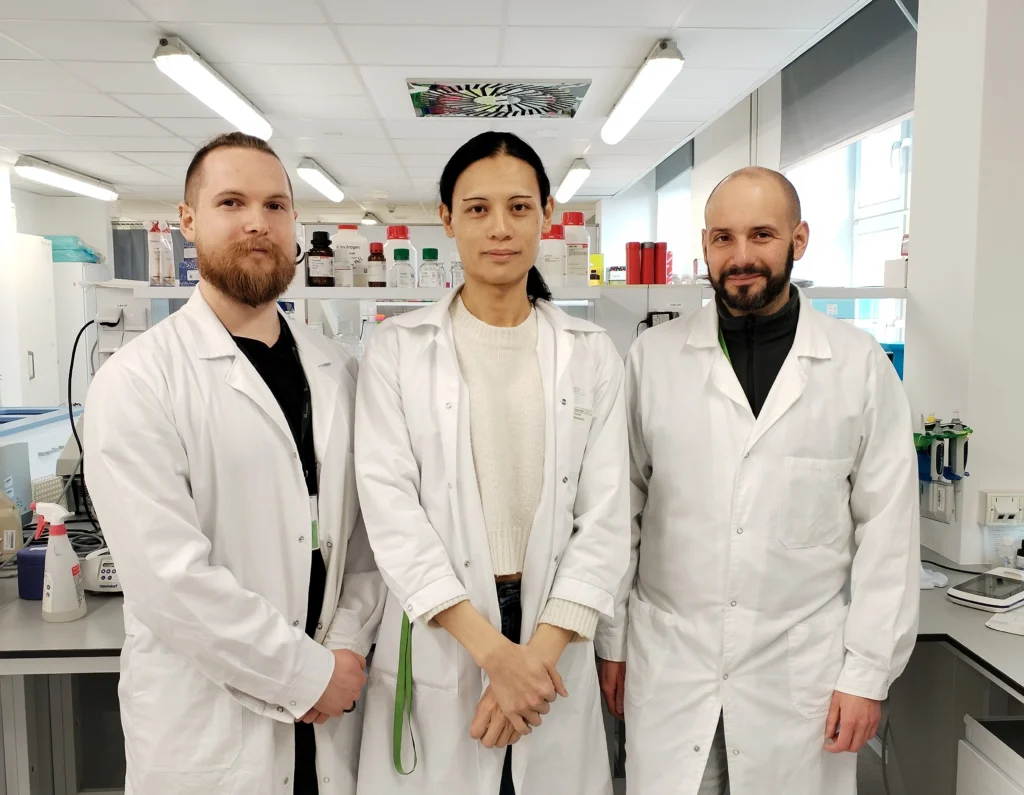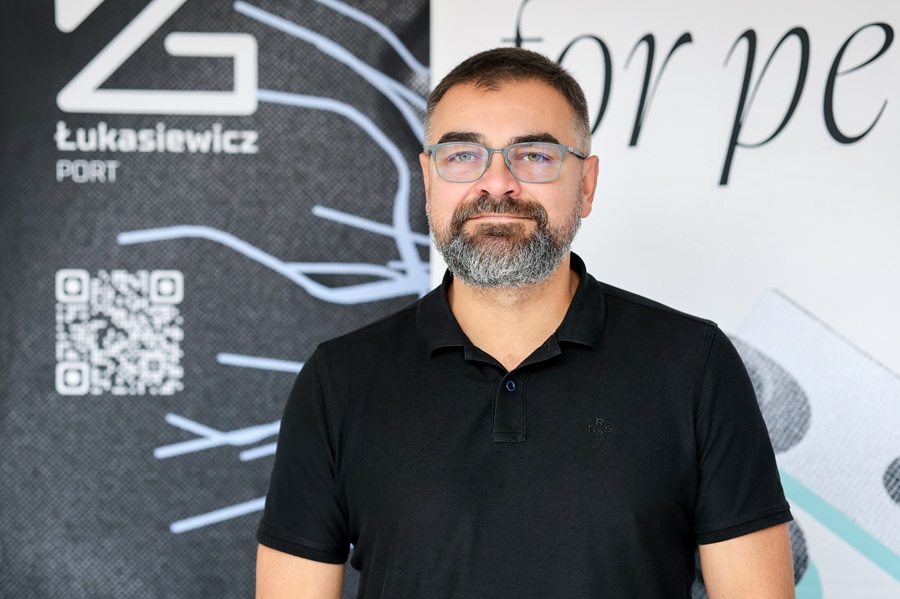
The team led by Dr. Heng-Chang Chen from Łukasiewicz – PORT, in collaboration with scientists from Jagiellonian University and KU Leuven (Belgium), has set out to identify innovative strategies for the functional cure of HIV. The research has received PLN 3.5 million in funding from the Weave-U NISONO program.
According to the World Health Organization, by the end of 2023 approximately 39.9 million people worldwide were living with HIV, including about 1.4 million children aged 0–14. These figures raise an important question: why, despite technological progress and advances in medicine, does HIV remain undefeated?
An Enemy Lying Dormant
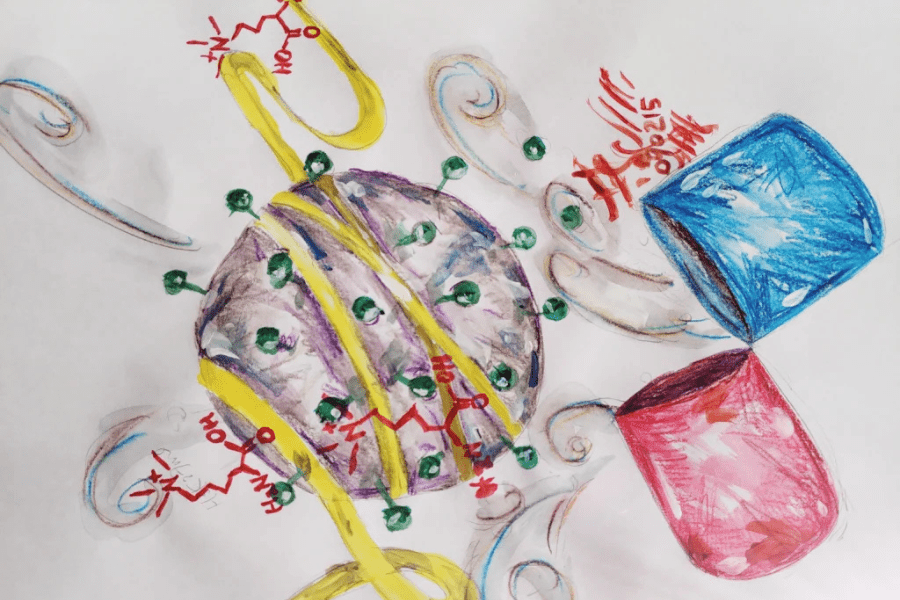
After entering a cell, the viral genetic material (RNA) undergoes reverse transcription into viral DNA, enters the cell nucleus, and integrates into the host genome. The virus becomes indistinguishable from our own DNA and can replicate together with host cells. At this stage, some viruses enter a silent infection mode known as latency, making the virus invisible to the immune system.
– What is most dangerous about this virus and what makes it so difficult to eliminate is the reawakening of proviruses from latency—the so-called viral rebound—after discontinuation of antiretroviral therapy, explains Dr. Heng-Chang Chen, leader of the Quantitative Virology Research Group at Łukasiewicz – PORT.
HIV in the Crosshairs
Dr. Chen gained experience as a molecular virologist at, among others, Humboldt University of Berlin, Dr. Filion’s laboratory at the Centre for Genomic Regulation in Barcelona, and Dr. Benkirane’s laboratory at the Institute of Human Genetics in Montpellier.
Scientists searching for effective anti-HIV therapies have managed to slow disease progression and extend patients’ lives. However, these treatments are costly, not accessible to everyone, and require lifelong antiretroviral drug use. Although the virus has not yet been completely eliminated from infected individuals, there is hope—Dr. Chen is working on an alternative solution.
Functional HIV Therapies Combined with Genomic Informatics—Soon?
Currently, at least five different antiretroviral strategies are used in the fight against HIV. One of them, the “shock and kill” strategy, aims to first reactivate latent HIV and then eliminate it using antiretroviral drugs or the host immune system. Unfortunately, this approach has not been successful to date, prompting scientists and clinicians to explore alternative strategies such as functional cure.
– The “block and lock” strategy aims to block proviral transcription and permanently lock the reservoir in a deeply latent state, explains Dr. Chen. Interestingly, we have observed that different antiretroviral drugs target different subgroups of proviruses. Since establishing my laboratory at Łukasiewicz – PORT, one of my main research areas has been investigating the impact of the host genome on shaping the microenvironment of the latent HIV reservoir (Chen, Vaccines 2023; Więcek & Chen, iScience 2023; Wiśniewski et al., iScience 2024). If we can understand these mechanistic interactions, we may be able to use knowledge about chromatin—such as chromatin silencing—to permanently block HIV transcription in deep latency.
The innovation in Dr. Chen’s research lies primarily in approaching HIV at a therapeutic and functional genomic level. Locking HIV in a latent state would be a long-awaited breakthrough, freeing patients from the need for daily medication.
A Clear Goal
– If the entire genome could be viewed as part of the host’s vast immunological machinery, understanding the functional properties of the genome would be crucial for overcoming viral infections, explains Dr. Chen. The Quantitative Virology Research Group hopes that understanding the role of the host genome in HIV latency will lead to better antiretroviral therapeutic strategies and, ultimately, enable the complete elimination of HIV infection in the future.
– In a scientist’s work, having a clearly defined goal is extremely important, emphasizes Dr. Chen, for whom the priority—both in his own work and that of the entire team—is to improve the quality of life of people living with HIV by ensuring better disease control and access to more effective and affordable therapies.
References
Chen, H.-C. (2023). The Dynamic Linkage between Provirus Integration Sites and the Host Functional Genome Property Alongside HIV-1 Infections Associated with Antiretroviral Therapy. Vaccines. DOI:10.3390/vaccines11020402
Więcek, K., & Chen, H.-C. (2023). Understanding Latent HIV-1 Reservoirs through a Host Genomics Approach. iScience. DOI:10.1016/j.isci.2023.108342
Wiśniewski, J., Więcek, K., Ali, H., Pyrc, K., Kula-Pãcurar, A., Wagner, M., & Chen, H.-C. (2024). Distinct Topological Properties of Function… iScience.