Two new research projects carried out at Łukasiewicz – PORT have received funding from the National Science Centre (NCN) under the OPUS 29 and PRELUDIUM 24 calls. Dr. Agnieszka Krzyżosiak is conducting research on amyotrophic lateral sclerosis (ALS), focusing on disruptions of cellular proteostasis in the context of aging processes. Meanwhile, Kamila Nowak is carrying out a project dedicated to novel semiconductor materials for next-generation electronics.
Age-dependent mechanisms of ALS
Amyotrophic lateral sclerosis (ALS) is a severe, progressive neurological disease in which the gradual degeneration of neurons responsible for motor control occurs. The disease leads to increasing muscle weakness and, consequently, to paralysis and respiratory failure. The risk of developing ALS increases significantly with age, and despite the growing importance of ALS for healthcare systems, effective treatment methods remain very limited.
“Understanding how aging affects the development of ALS is crucial for the search for new therapeutic possibilities,” emphasizes Dr. Agnieszka Krzyżosiak, Head of the Neurodegeneration Mechanisms Research Group at Łukasiewicz – PORT.
The project carried out under the OPUS 29 call aims to develop new human ALS models that will make it possible to study the disease in the context of cellular aging. Instead of animal models or models based on induced pluripotent stem cells reverted to very early stages of development, the research will use modern methods of direct cell “reprogramming” of patient-derived cells into motor neurons. This approach makes it possible to preserve the so-called “age trace,” which plays an important role in the development of neurodegenerative diseases.
In the developed models, advanced proteomic analyses will be conducted to identify age-dependent molecular signatures characteristic of ALS, as well as new potential disease modifiers. Selected factors will be subjected to further functional validation, and the research will be extended to include analysis of the role of astrocytes in the development of neuronal pathology. The project aims to create a unique research platform and to provide in-depth mechanistic knowledge that may contribute to the development of new, targeted therapeutic strategies for patients with ALS.
A semiconductor with electrical and magnetic properties
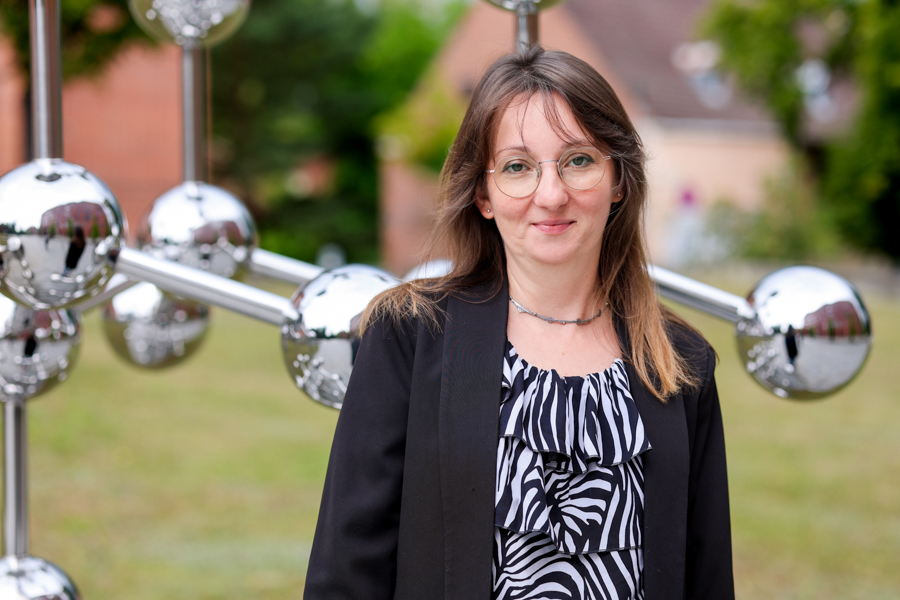
The pace of development of modern electronics requires a constant search for new materials solutions. The project carried out by Kamila Nowak under the PRELUDIUM 24 call focuses on research into a novel semiconductor that may find applications in electronics and spintronics. The goal of the researcher from the Advanced Semiconductor Epitaxy Research Group is to create a material that combines electrical and magnetic properties within a single system.
As part of the project, thin semiconductor layers are produced using an advanced plasma-assisted molecular beam epitaxy technique, a method that allows the material to be “built” layer by layer with very high precision. This enables precise control over the material composition and its doping. The resulting structures are then subjected to a series of fundamental studies to determine the effect of manganese incorporation on their physical properties.
As emphasized by the project’s author, Kamila Nowak, “The project will make it possible to better understand the relationships between the material structure and its properties, which is crucial for the development of new solutions for the electronics of the future.”