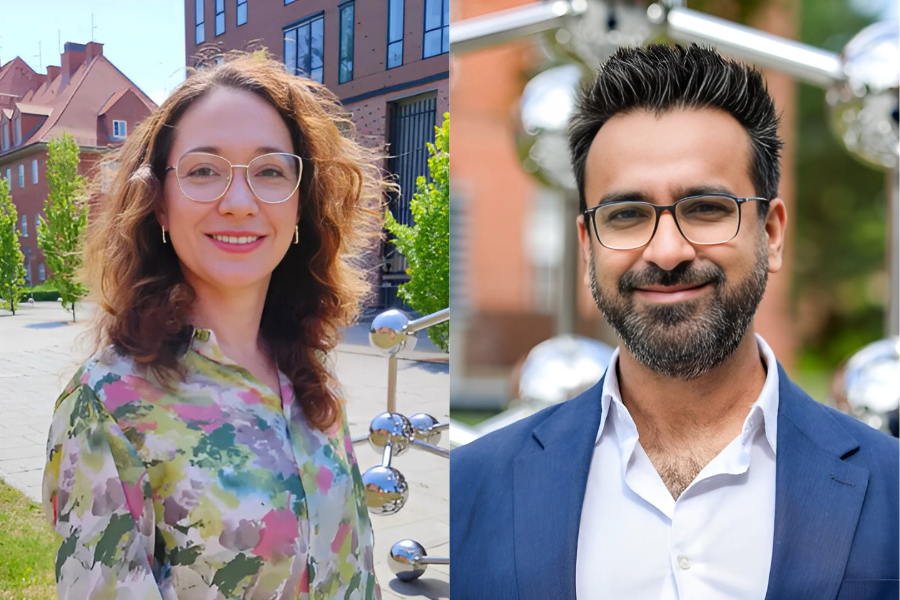
The AutoHealth consortium, involving Dr Raluca Contu from the Astrocyte Biology Research Group at Łukasiewicz – PORT, will investigate how stress experienced early in life affects the brain and body in adulthood. Meanwhile, Dr Ali Jawaid, as part of the EMPATHY consortium, will analyze brain–body interactions underlying eating disorders. Both projects have received funding from ERA-NET NEURON – a network of 35 organizations and ministries from 28 countries supporting research on the brain and its disorders.
Understanding cooperation between the brain and the body is crucial for improving health and well-being. Research shows that these two systems remain in constant communication, influencing both mental and physical health. Disruptions to this interaction – caused by genetic factors, environmental stress or lifestyle – can lead to metabolic and psychiatric disorders affecting millions of people worldwide.
Research on brain–body interactions in the context of disease may contribute to the development of better treatments and prevention strategies, supporting brain health and improving quality of life. Thanks to the funding received, Dr Raluca Contu and Dr Ali Jawaid will be able to further develop their research and help address some of the most serious health challenges of our time.
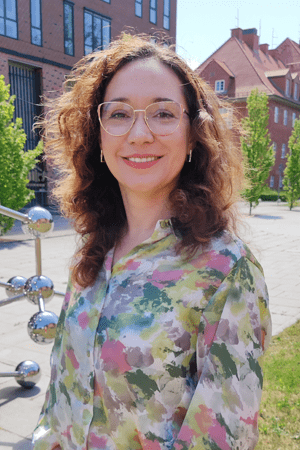
The impact of stress on cellular health
We know that stress affects every cell in our body – but how exactly does this happen? The AutoHealth project focuses on a process known as autophagy, which helps maintain cellular health. Autophagy allows cells to remove and recycle damaged components, playing a key role in maintaining cellular balance and stress responses. Significant financial support will enable Dr Contu to continue this research.
The AutoHealth consortium is an international team led by Dr Nils C. Gassen from the University Hospital Bonn (Germany), and includes Dr Mouna Maroun (University of Haifa, Israel), Dr Mathias Schmidt (Max Planck Institute of Psychiatry, Germany), Dr Hale Yapici Eser (Koç University, Turkey), and Dr Raluca Contu from Łukasiewicz – PORT (Poland). The scientists will use advanced research techniques to examine how early-life stress affects physiology and metabolism over time and throughout the human lifespan. Parallel studies will include biological models and participants with psychiatric and metabolic profiles and documented stress histories, in order to identify correlations relevant for clinical applications.
Novel strategies for treating stress-related disorders
The project aims to develop strategies to reverse stress-induced autophagy deficits in both the brain and the body, and to propose innovative approaches for managing stress-related disorders. The results will be tested in clinical studies to assess how new therapeutic strategies can help individuals with stress-related metabolic and psychiatric disorders.
The AutoHealth project builds on previous collaborations within the SAME-NeuroID (Horizon Europe) and ASTROMICS (Weave-Unisono) projects.
Tackling eating disorders: studying brain–immune system interactions
Eating disorders such as anorexia and bulimia affect millions of people worldwide. Research led by Dr Ali Jawaid, head of the Translational Neuropsychiatry Research Group (TREND Lab) at Łukasiewicz – PORT, will significantly deepen understanding of the causes of these disorders. The EMPATHY consortium assumes that maternal metabolic health during pregnancy and breastfeeding influences offspring brain development, particularly in regions regulating feeding behavior, thereby increasing the risk of eating disorders.
A key role in this process is played by immune cells of the brain known as microglia. Microglia are highly sensitive to nutritional signaling and can influence the development of neuronal circuits that control feeding behavior.
The project will examine how metabolic insults alter neuron–microglia interactions in the developing mouse brain and how these changes affect feeding behavior. In parallel, clinical studies will be conducted, including those involving mothers and children. Ultimately, potential molecular pathways will be manipulated in a fruit fly model to study molecular cascades controlling feeding behavior across species. Dr Ali Jawaid will oversee all translational aspects of the EMPATHY project.
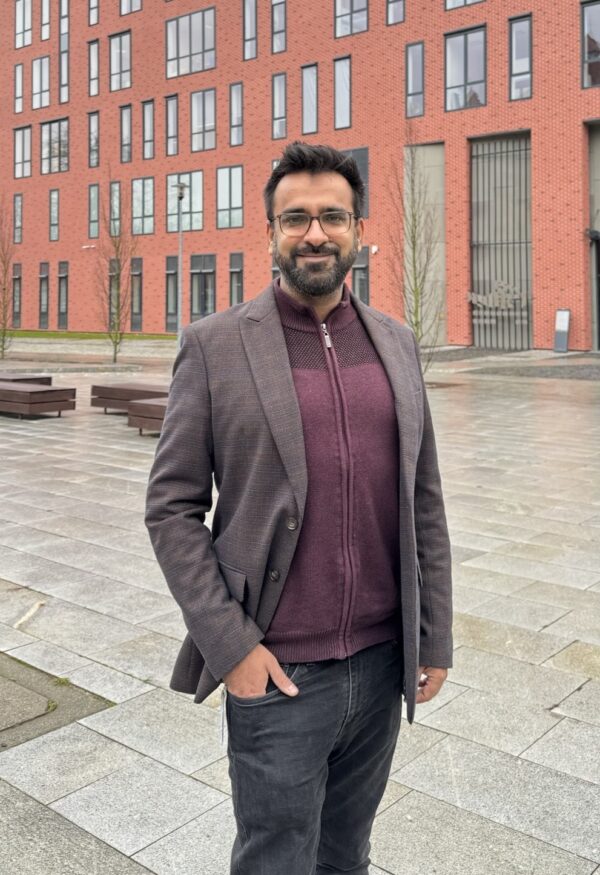
An international team of experts
The consortium brings together leading experts in behavioral and molecular neuroscience as well as immunometabolism from Czechia, France, Lithuania, Poland and Switzerland. Participants include Agnès Nadjar (University of Bordeaux, France), Urtė Neniskytė (Vilnius Life Sciences Center, Lithuania), Isabelle Mansuy (ETH Zurich, Switzerland), Michaela Fenckova (University of South Bohemia, Czechia), and Ali Jawaid (Łukasiewicz – PORT, Poland).
Łukasiewicz – PORT in global research projects
Research conducted by Dr Viorica Raluca Contu and Dr Ali Jawaid will help to better understand complex brain–body interactions. Translating their discoveries into clinical applications will enable the development of new solutions for patients suffering from metabolic and psychiatric diseases. Once again, PORT scientists are collaborating and securing funding within international consortia, gaining a unique opportunity to improve the quality of human life.