Stress triggers a cascade of complex biochemical reactions in the body. One of their consequences may be the disruption of autophagy – a cellular “self-cleaning” process. Dr. Viorica Raluca Contu, who leads the AutoHealth project, investigates how stress affects this mechanism and how the cooperation between the body’s metabolism and the brain shapes our mental health.
The AutoHealth project (“Autophagy as a link between peripheral metabolism and stress in mental health: from experimental models to clinical applications”) has been recommended for funding under the 4th call of the international NEURON Cofund 2 program.
Dr. Contu, from the Biology of Astrocytes Research Group at Łukasiewicz – PORT, will conduct the research within an international consortium together with partners from Germany, Israel, and Turkey. The total project budget exceeds one million PLN.
Autophagy – order within the cell
The central concept in Dr. Contu’s research is autophagy – an internal mechanism through which cells remove damaged or unnecessary components. This process enables them to maintain balance and function properly.
“Imagine a room that hasn’t been cleaned for weeks,” explains Dr. Contu. “It becomes difficult to work in such a space. Cells function in a similar way – without regular cleaning, they begin to malfunction.”
Disrupted autophagy may be linked to both metabolic and neuropsychiatric disorders. Although scientists are gaining an increasingly better understanding of its role, the process still requires intensive research.
The brain–body communication channel
In the AutoHealth project, researchers examine how stress affects autophagy in metabolic tissues, such as blood, as well as in the brain. They also test whether therapies that modulate autophagy can alleviate the effects of stress. “We want to understand how far the impact of stress extends – from the molecular level all the way to behavior,” says Dr. Contu.
When autophagy fails to function properly, toxic molecules can accumulate in the body and reach the brain, disrupting its activity. “Even a minor dysfunction in the removal of cellular byproducts can have major consequences. This is precisely where metabolic and neuropsychiatric disorders intersect,” the researcher explains. Autophagy is therefore not only a cleaning mechanism but also plays an important role in communication between the body and the brain.
Metabolic mechanisms are already used in medicine. One example is the treatment of Parkinson’s disease, in which patients receive L-DOPA – a compound capable of crossing the blood–brain barrier and being converted into dopamine in the brain. The AutoHealth team aims to determine whether stimulating autophagy and improving metabolic function in peripheral tissues can influence brain function and reduce symptoms of depression or obesity.
The project includes studies using experimental models of early life stress combined with metabolic challenges in adulthood, as well as analyses of two groups of patients with a history of stress – individuals with depression and individuals with obesity. Multidirectional analyses of tissue and blood samples are expected to reveal characteristic protein and metabolite patterns associated with disrupted autophagy. In the future, these patterns may serve as indicators for assessing the effectiveness of pharmacological interventions designed to modulate autophagy and limit stress-induced damage.
“Every cell in the body responds to stress. If we understand the mechanisms behind this process, we may find ways to mitigate that response,” concludes Dr. Contu.
From Japan to Poland – the researcher’s scientific journey
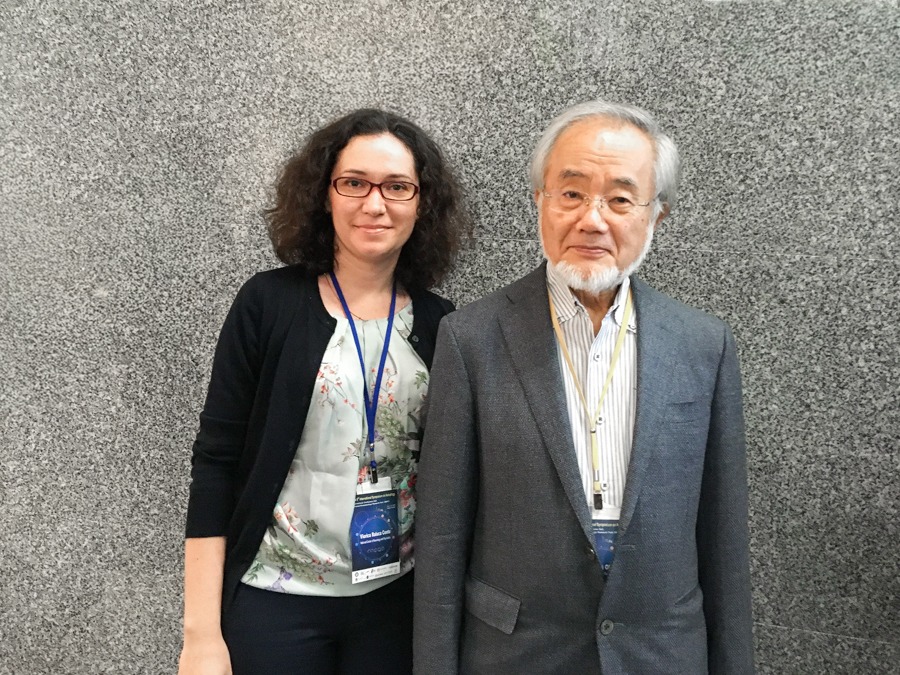
Dr. Raluca Contu, a specialist in molecular biology and neurobiology, spent many years conducting research in Japan – the country where the process of autophagy was first described. Its discoverer, Prof. Yoshinori Ohsumi, received the Nobel Prize in 2016. “I was in Japan at the time – in the right place at the right moment,” recalls Dr. Contu.
Today, Dr. Contu combines expertise in cell biology and neuropsychiatry to understand how the relationship between cellular cleaning processes and the stress response affects mental health. Asked whether individuals themselves can support these processes, she replies: Yes, through physical activity and a low-calorie diet. These are natural ways to activate autophagy. Returning to a more natural rhythm of life may be key to improving both mental and physical well-being.