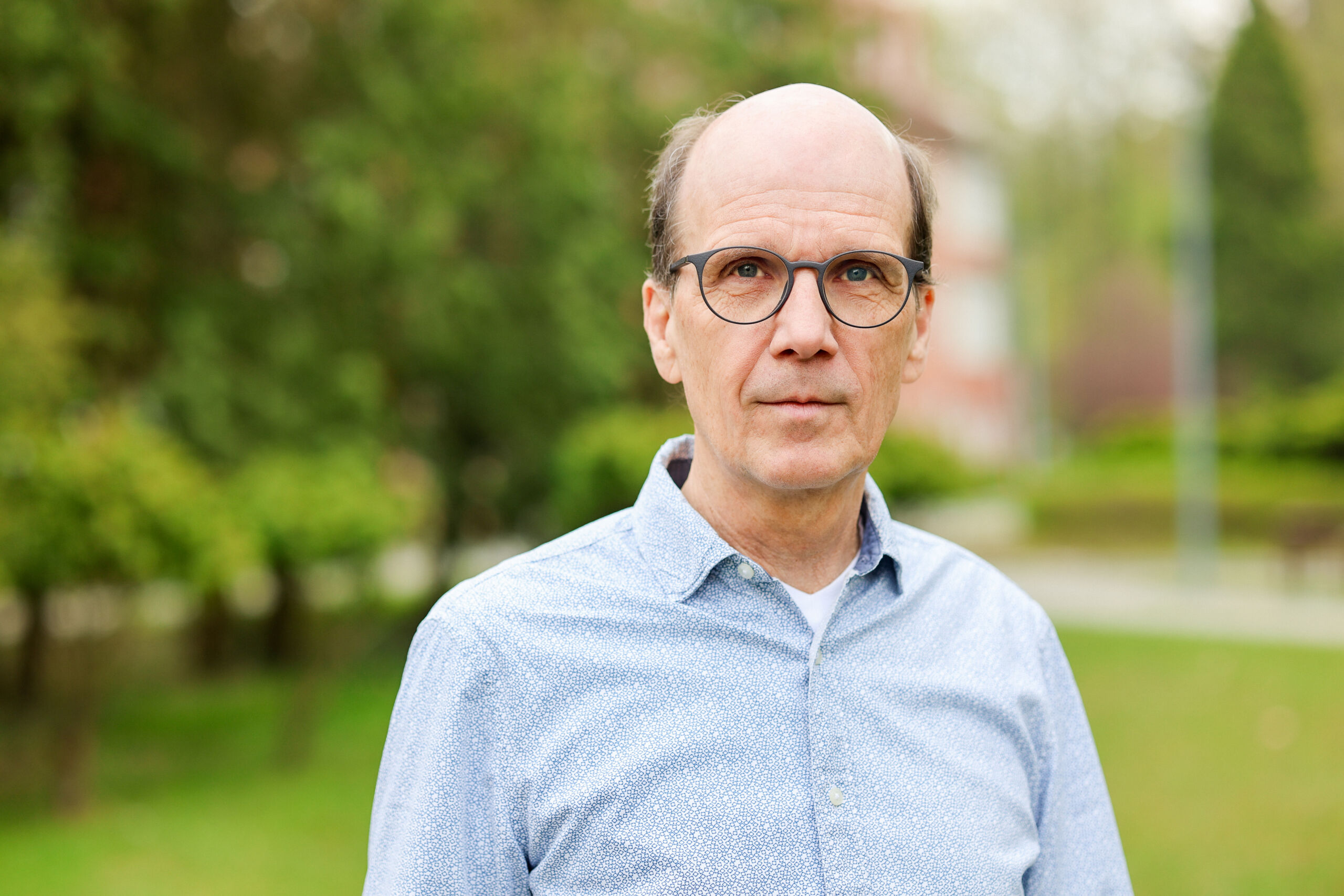
Prof. Bastian Hengerer, Director of the P4Health Center, talks about his vision for the center, translating scientific discoveries into solutions for patients, and management based on trust.
What is your vision for the P4Health Center?
Based on the science developed at P4Health and with the support of our platforms, we want to develop ideas for new therapeutic targets that we can eventually offer to investors.
The idea is to identify potential drug targets emerging from the research performed in different groups, further develop them, and build a solid theory explaining how and why such therapies could work in patients, with the help of the platforms. This approach will help secure the long-term development of the Center.
At the same time, I want the research groups within the Center to be able to perform their research without being influenced by me. It should truly remain their own scientific direction. What I do expect from the different research groups are ideas for potential therapeutic targets and concepts that could eventually be translated into therapies.
P4Health is developing five technology platforms integrating research and modern biomedical technologies. What will be the key priorities for the coming months?
Each platform is closely linked to a research group to ensure expertise for the technologies provided by the platform. The different platforms provide an aligned set of technologies to explore the potential of a proposed drug target.
Getting the platform system up and running is currently the highest priority. We will start with a few examples that we can run through the entire platform process. It is essentially a sequence of events. We know more or less which boxes we need to tick. Each participant within the platform will take over a specific task and perform a defined experiment, and together these activities will form the story of how we can identify a new therapeutic idea or concept for treating a disease.
At the same time, I am trying to help all scientists at P4Health understand what I really need – what kind of ideas have value and what defines a potential therapeutic target. Pharma research is in many ways similar to academic research, but in the end it has different needs. Scientists need to understand what pharma research requires so they can incorporate those needs into their daily scientific work.
You are often seen as a bridge between academia and industry. How has your industry experience influenced your scientific work?
I think the main influence of working in the pharmaceutical industry on my scientific experiments and my life as a researcher is maintaining focus. It means not getting distracted too easily by interesting side aspects, but keeping a clear goal in mind and consistently following it. It also means leaving out experiments or activities that may be interesting and motivating but do not directly contribute to the final objective.
Perhaps it is this pressure to deliver results within a very short timeframe – something typical for the pharma research environment – that shapes most of my activities in academia today. It drives everything toward efficiency and efficacy.
During your meeting with the Center’s staff, you said: “Come to me with your ideas. I know how to help you make them happen.” How would you describe your management style?
Over 35 years of management experience, I have worked with people of many different personalities. My management style is based on trusting people and avoiding micromanagement. At the same time, I define responsibilities very clearly and make sure I follow up on them. It is not only about assigning responsibility, but also checking at the right time whether everything is progressing according to plan. For this, I need my own system.
Trust itself is already a form of motivation for people. It is also important to listen to their daily problems and challenges and try to find solutions. We still need to strengthen communication skills and continue building stronger team integration.
Because I come from a very different environment, I often look at things here from another perspective. I ask many questions – sometimes naïve questions – about how things work and why they work the way they do. So far, this approach has already helped eliminate quite a number of hurdles.
Was there anything that particularly surprised you after coming to Poland?
Bureaucracy – especially bureaucracy driven by a lack of trust. I am trying to change that.
Professor Jarosław Bosy, Director of Łukasiewicz – PORT, placed his trust in me. Thanks to that, I have the opportunity to create a kind of autonomous environment here. We have our own organizational structure, and this eliminates many problems.
The term “Center of Excellence” is still not fully understood by everyone. How do you define it in the context of P4Health?
I never personally chose the term “Center of Excellence.” Of course, it is the official name, but it defines the direction we want to follow. We have a number of excellent scientists performing research at a high international standard.
In terms of infrastructure and the instruments and devices we have available, we are already operating at the excellence standard. This excellence will be reflected in an increasing number of publications from the research groups, greater visibility within the academic environment, and our attractiveness as a partner for the pharmaceutical industry.
Can P4Health become an attractive place for PhD students?
Absolutely. Currently, we have eight open PhD positions, and the job postings are already online. I am also open to interns and trainees, who are usually highly motivated. We will try to find funding opportunities for them as well.
Looking ahead, what discoveries would you personally hope to see emerge from P4Health?
A potential therapeutic target that could help treat psychiatric disorders, neurodegenerative diseases, or cancer. These are ambitious goals, but identifying something like this would be scientifically extremely rewarding. At the same time, it would help secure the long-term future of P4Health.