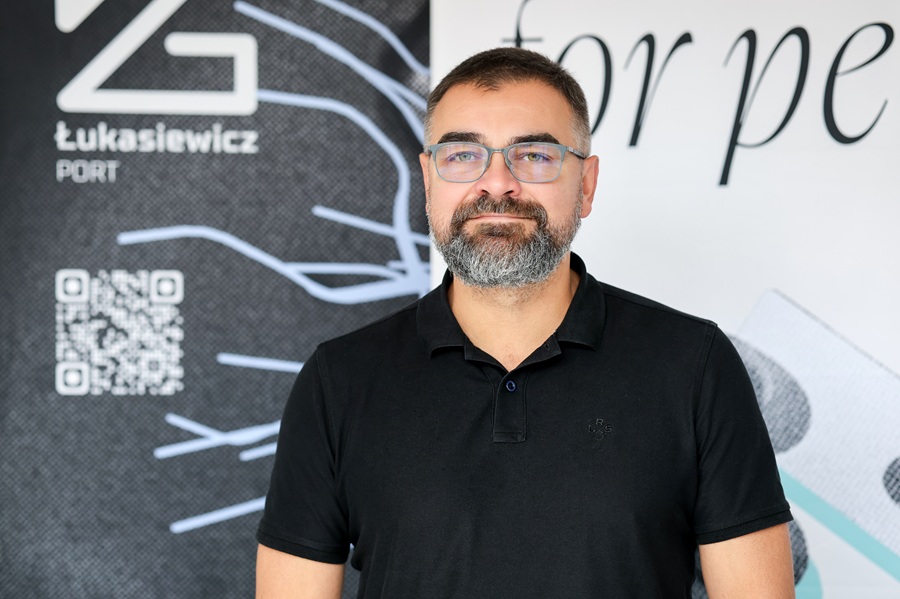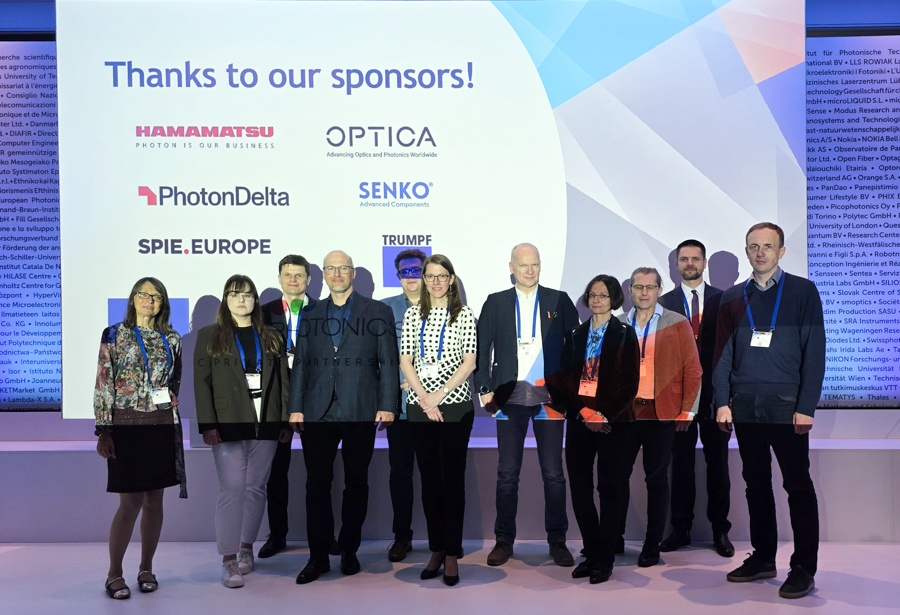
Dr. Krzysztof Czyż represented the institute at Photonics Partnership Annual Meeting in Brussels, one of the key European events dedicated to the future of photonics. Discussions focused on technologies closely aligned with the competencies being developed at Łukasiewicz – PORT, as well as solutions supporting modern diagnostics.
The development of photonics is transforming the way health conditions are diagnosed and monitored. The proper use of light makes it possible to quickly, precisely, and noninvasively obtain information about the molecular composition of tissues and biological fluids. That is why the conference devoted significant attention to topics such as liquid biopsy, infrared spectroscopy, miniaturized systems for biological sample analysis, and systems enabling continuous monitoring of health parameters.
These areas are particularly important from the perspective of advancing personalized medicine. Modern optical sensors may in the future support earlier disease detection, assessment of a patient’s response to therapy, and the identification of biomarkers associated with cancer, neurodegenerative diseases, and infectious diseases. The integration of photonics with technologies that enable the analysis of very small biological samples, readout electronics, data analysis, and artificial intelligence is also becoming increasingly important.
“Photonics is becoming a technology that connects the worlds of materials, microelectronics, biology, and medicine. For Łukasiewicz – PORT, it is particularly important that the competencies we are developing– from thin-film and microstructure fabrication to advanced materials characterization – align with European directions in the development of sensors, biosensors, and next-generation diagnostics,” says Dr. Krzysztof Czyż, who leads Materials and Technological Research Laboratory.
An important topic at the Photonics Partnership Annual Meeting was also European infrastructure initiatives designed to help move research results toward prototypes and technology demonstrators. Discussions included the development of pilot lines for photonic integrated circuits, heterogeneous integration, and solutions combining photonics, semiconductors, microelectronics, and sensors. Photonics is regarded as one of the strategic areas of Europe’s technological competitiveness. The development of these technologies is expected to be supported through programs such as Horizon Europe, Digital Europe, Chips JU, as well as EIC and EIB instruments.
Łukasiewicz – PORT is not only observing the most important technological trends, but also aims to help shape them by building relationships with European scientific and industrial partners and developing solutions that address real needs in medicine and industry.
The event was co-organized by the Industry Contact Point for Medical Technologies and Health.