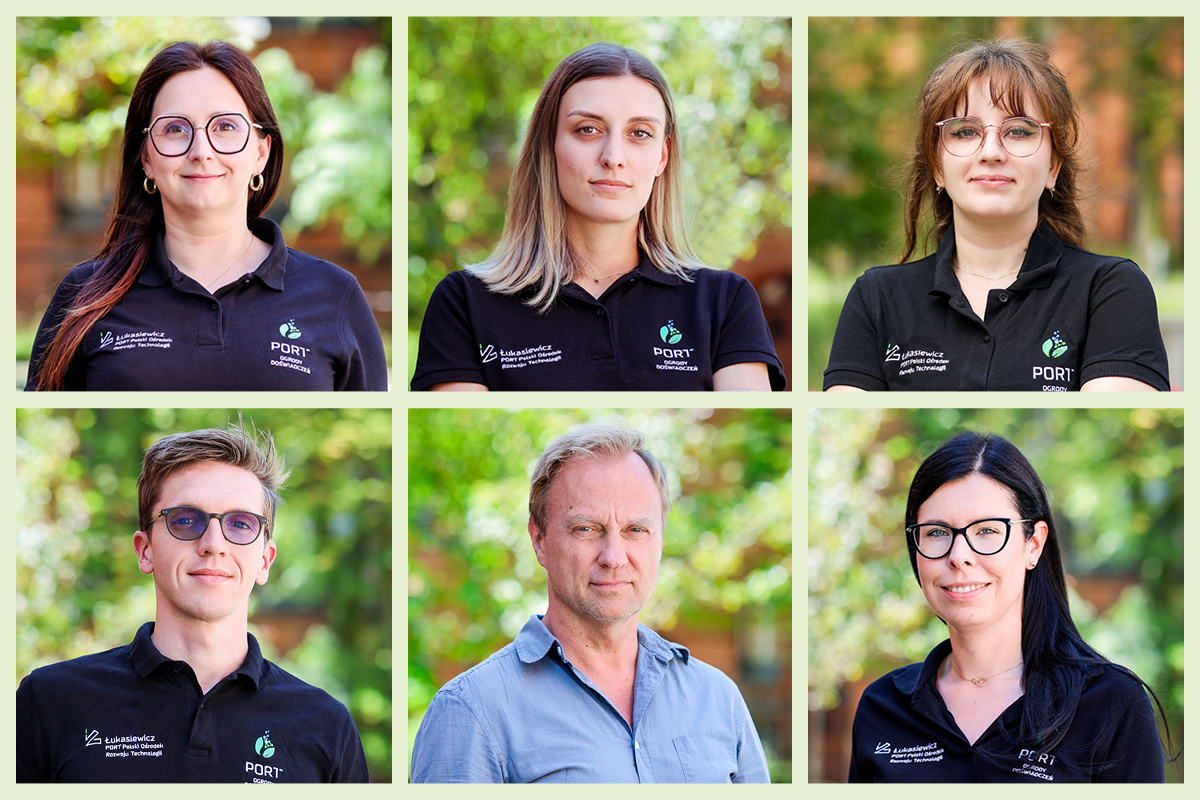
They lead workshops, develop original lesson plans, and take part in science outreach events. Behind the Gardens of Experiences is a team of educators from a range of disciplines, united by their ability to make complex scientific topics accessible.
Different Specialties, One Team
“Curiosity about the world is contagious, and the best way to learn is by asking questions, experimenting, and discovering things for yourself. At the Gardens of Experiences, we have the right facilities to make that possible—classrooms and laboratories designed specifically for children and young people. This allows participants to experience and observe the phenomena we discuss firsthand,” says Patrycja Pikoń-Kwiatkowska who coordinates the team of educators. A biologist and educator with more than ten years of experience working with children and young people, Patrycja began teaching biology and chemistry while still in college. She later managed the educational activities team at Humanitarium and today is responsible for organizing and developing the educational programs offered by the Gardens of Experiences.
The team brings together specialists from a wide range of fields, from biology and chemistry to biological anthropology and food safety.
Adrian Patej is a chemist who has been involved in science communication for more than ten years. He was active in the “Jeż” Chemistry Student Research Club at the University of Wrocław, won awards at the Chemical Demonstrations Festival in Toruń, produced podcasts, and worked as a science journalist for Academic Radio Luz. He also has hands-on research experience gained while working toward his PhD.
At the Gardens, Adrian leads workshops and training sessions and develops educational game scenarios, including outdoor games. As he explains, his goal is to share more than just knowledge: “I also want to teach a way of thinking about science. The point is not to accept ready-made answers without reflection, but to ask questions, explore different possibilities, and draw conclusions based on observations and results,” says Adrian.
When working with children, he draws on his natural sense of humor, which helps him quickly engage participants and respond with ease even to the most unexpected questions.
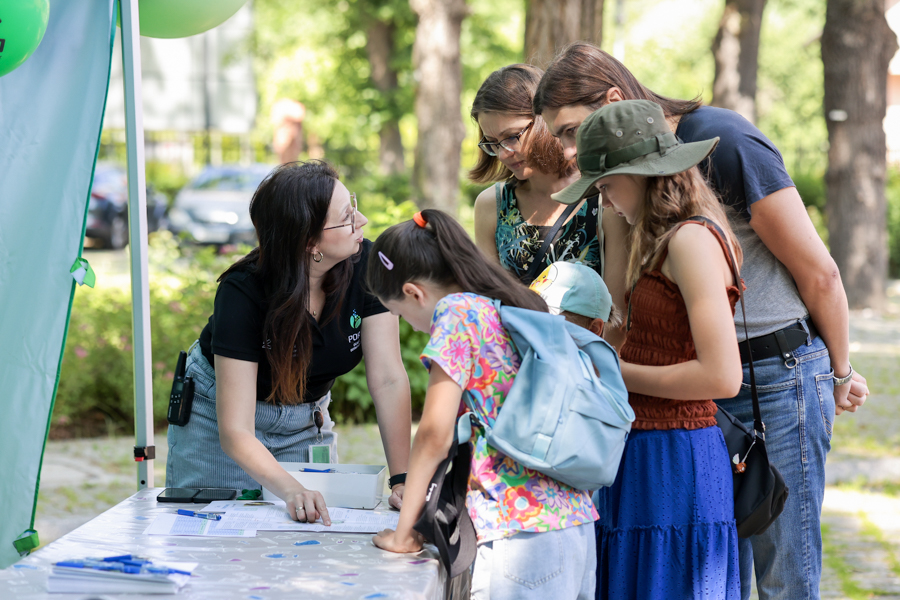
Małgorzata Tomaszewska, a graduate of biological chemistry as well as management and production engineering, combines teaching with coordinating the organizational side of the Gardens’ activities. She develops lesson plans, prepares outdoor games and training sessions for teachers, and is also responsible for purchasing processes, financial documentation, and logistics. She makes sure that all organizational and administrative matters are in order—and that everything in her Excel spreadsheets adds up.
“What I like most about this job is the variety. I spend part of my time with participants during workshops—both younger children and older students—and part of it on organizational and administrative tasks. There is no routine, and I get to combine different areas that I genuinely enjoy,” says Gosia.
Zofia Wołyniec-Kuzia is a food safety engineer. Before joining the Gardens of Experience, she worked in a food quality laboratory. Although she found the work itself interesting, she missed interacting with people. At the Gardens, she found the perfect combination: she still works in a laboratory, but now she certainly has no shortage of interaction with workshop participants.
Her calm nature and considerable patience are particularly valuable when working with younger children. Passionate about nature, Zosia hopes to inspire the same sense of wonder in participants during her classes. She also enjoys puzzles and often incorporates them into the activities she develops. When she needs a moment to unwind, she turns to LEGO bricks—a bouquet of flowers she built herself sits on her desk.
“I try to make sure participants leave each class feeling that there is still so much around us to discover,” says Zosia.
Sandra Szostak is a biological anthropologist whose main area of interest is the human being—our history, evolution, and biology. Although she is the newest member of the Gardens of Experiences team, she quickly found her place in science education. She presents complex subjects in an accessible way without oversimplifying their scientific content, and she looks for methods that engage participants from the very first minutes of a class.
“What makes me happiest is when participants start asking questions and finding the answers on their own. That is when I know the class has truly sparked their curiosity,” says Sandra.
Learning Through Experience
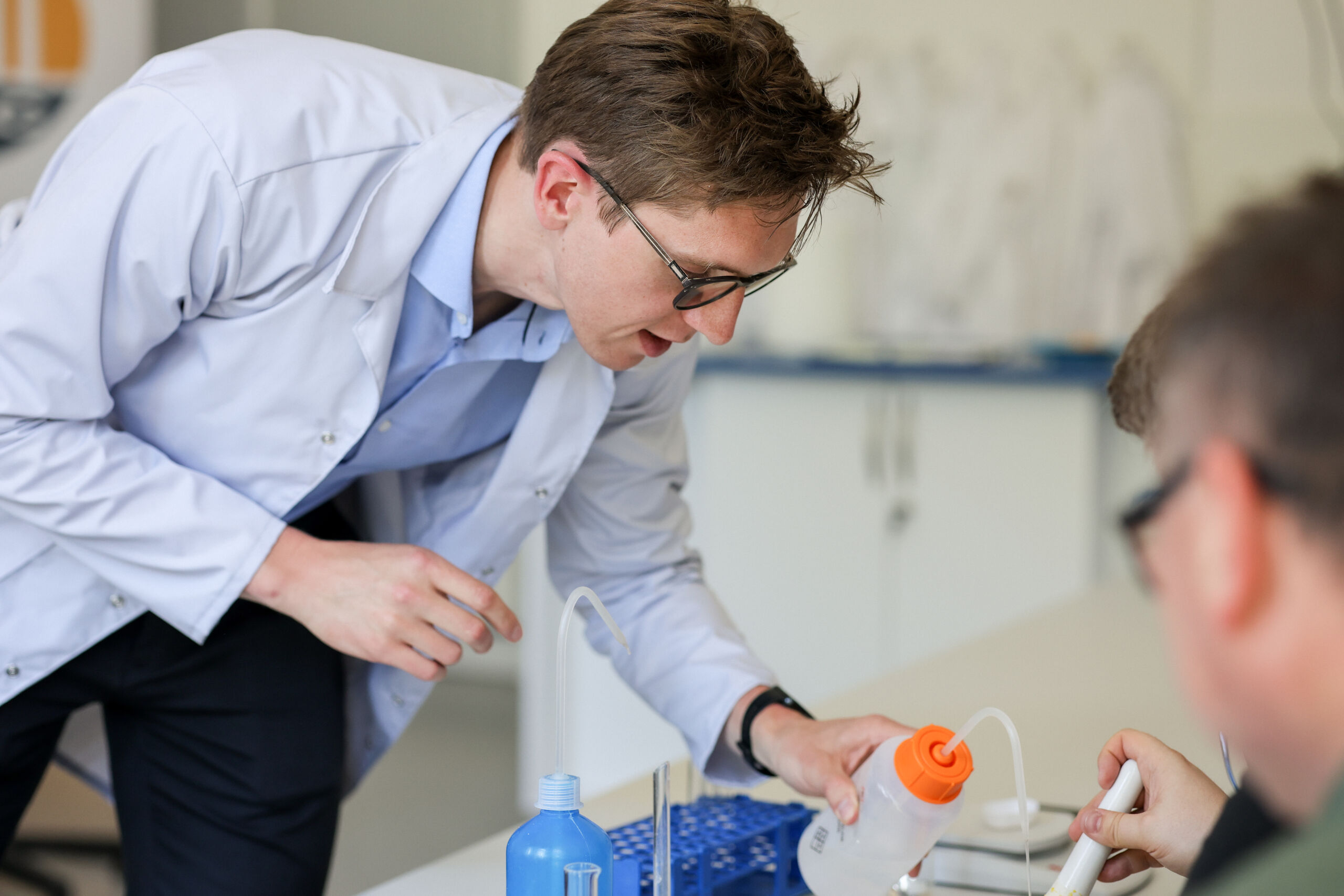
The Gardens of Experiences use the STEM approach, bringing together science, technology, engineering, and mathematics. At its core is learning through hands-on activities, problem-solving, and drawing conclusions independently. During classes, participants observe phenomena, conduct experiments, compare results, and work toward answering a specific question.
In a workshop on fluorescence, participants explore what turmeric, tonic water, and vitamin B12 have in common. They observe substances under UV light, extract chlorophyll from plants themselves, and then use fluorescent dyes in subsequent activities. A phenomenon that initially seems abstract becomes something they can observe and investigate firsthand.
In the “Super-Strong Soap Bubbles” workshop, the starting point is the properties of water and the phenomena of hydrophobicity and hydrophilicity. “Chemistry on a Plate” gives participants an opportunity to explore food ingredients as well as natural and synthetic colorants. In “Who Ate the Donut? The Perfect Crime,” participants analyze fingerprints, shoe prints, and blood types to solve a crime mystery.
When Things Go Off Script
Even a carefully prepared class does not always go exactly according to plan—especially when the participants are children. Ask what sinks to the bottom, and you may hear the answer: “The Titanic.” After completing an experiment, children sometimes ask whether they are scientists now. There are also occasions when, after a class, most of a preschool group announces that this is exactly what they want to be when they grow up.
“Every workshop is different because it is shaped by the participants, their questions, and the way they see the world,” says Zosia.
Situations like these require educators not only to have strong subject-matter expertise, but also to think on their feet and adapt the way they explain concepts to the age and level of knowledge of their audience.

Beyond the Campus
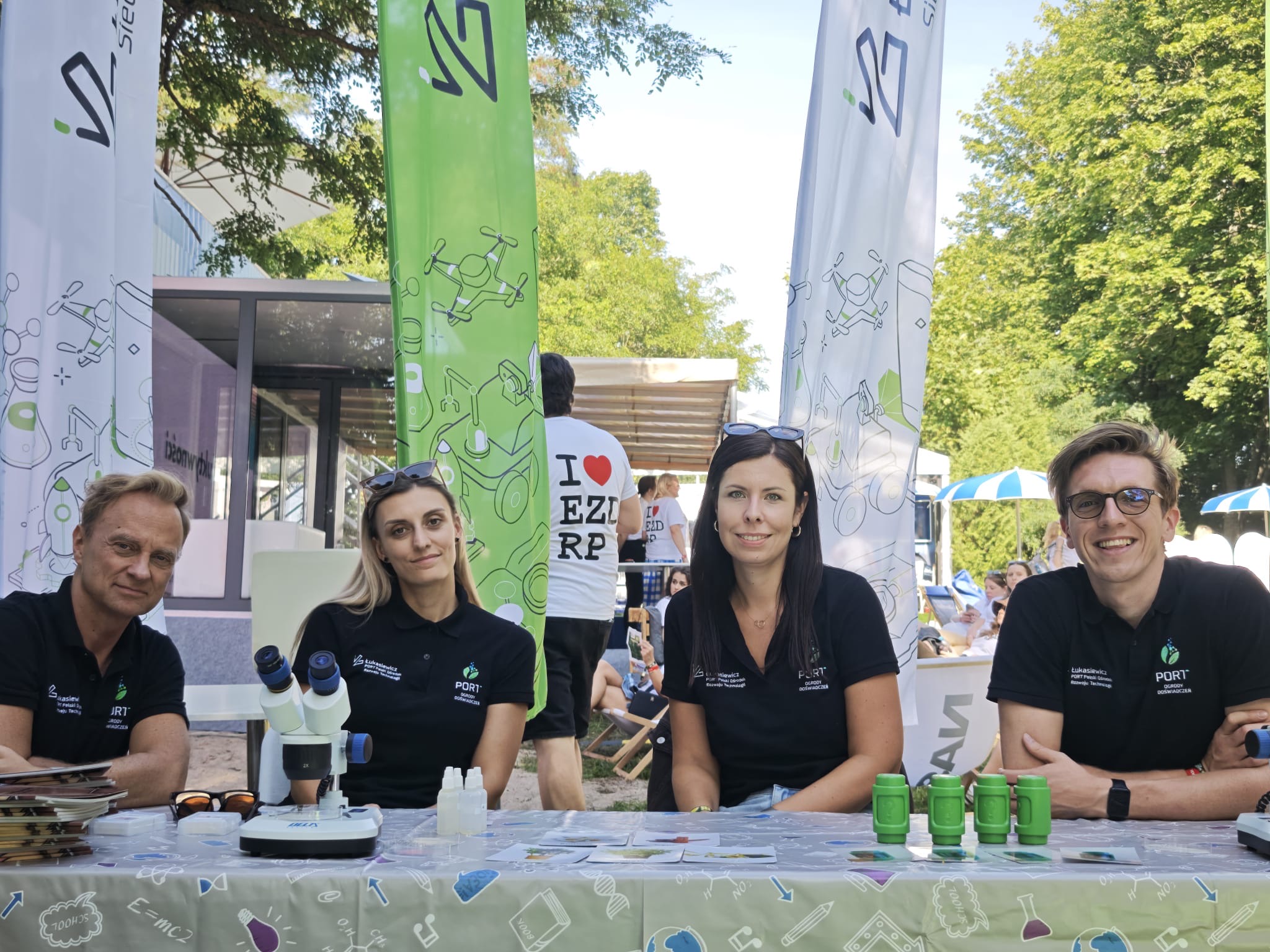
Laboratory workshops are only one part of the Gardens of Experience’s activities. The team also organizes day camps, birthday activities, outdoor games, and training sessions. It is involved in the Polish-German project “Cross-Border Gardens of Experiences” and regularly takes part in science outreach events, including the annual Science Picnic at the National Stadium in Warsaw.
The Gardens are also expanding their cooperation with business partners. Łukasiewicz – PORT is already carrying out initiatives with BASF and KOGENERACJA S.A., with further partnerships planned.
Why is Science Communication Important?
“You do not have to work professionally in science to be interested in its development and latest achievements. It is important to understand how scientific knowledge is created, to know how to ask questions, and to critically evaluate information. Working with children and young people is especially important because this is when we can spark an interest in science and technology. As a research institute, we do more than generate knowledge and develop new technologies. We also want to communicate about them responsibly and in an accessible way,” concludes Marek Staniewicz, Director of the Department of the Social Responsibility of Science, which oversees the Gardens of Experience.